Studio 7 Residency 2025 - Yasami Khadembashi
Studio 7 Residency 2025 - Yasamin Khadembashi
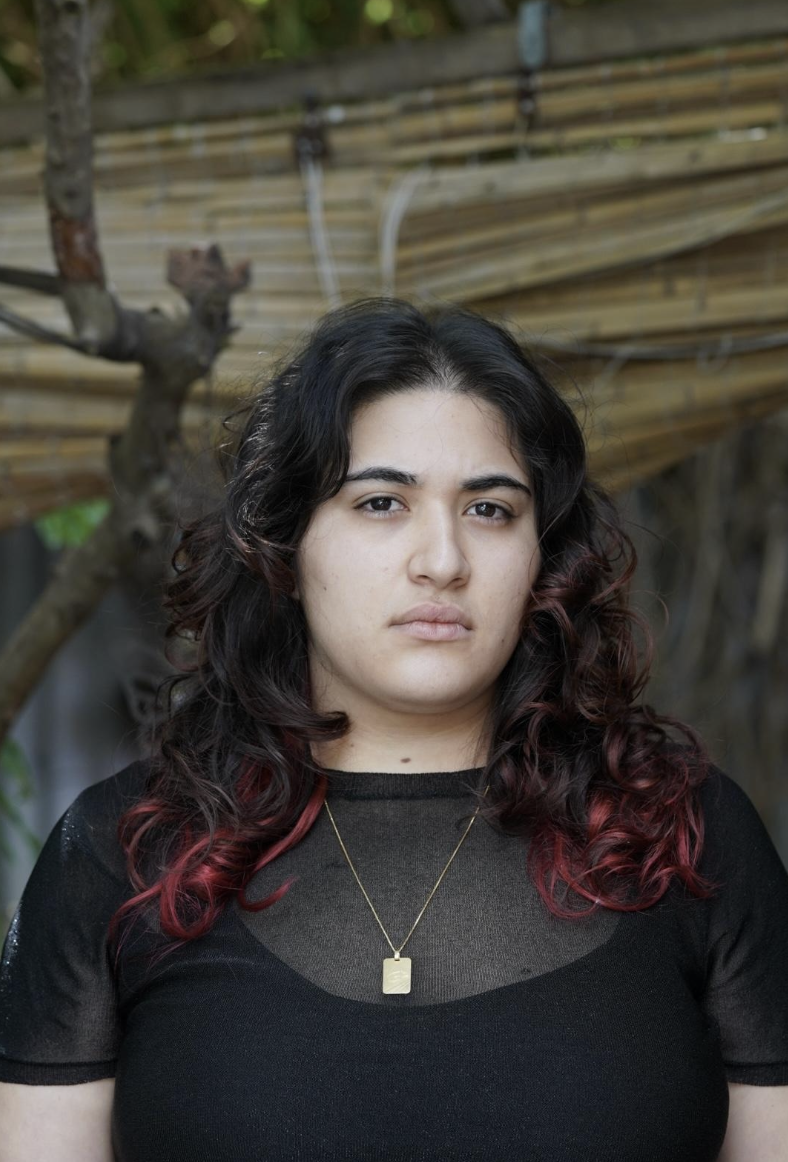
Yasamin Khadembashi is an Iranian-Australian multidisciplinary artist with a BCA from Curtin University. Her practice focuses on painting, tattooing, ceramics, sculpture, textile, and installation. Influenced by her family’s experiences immigrating to Australia, she draws upon the cultural discourses surrounding post-9/11 Islamophobia, the 2005 Cronulla race riots, the Global War on Terrorism, and the 1979 Iranian Revolution.
Her practice revolves around the identity crisis, confusion and displacement many queer Middle Eastern and Muslims feel growing up in the West. Yasamin’s work engages with issues experienced by first and second generation, people of colour and immigrants; often ostracised, marginalised and forced to assimilate. Her work explores the loss of
language, heritage, land, customs, beliefs, food, dance, music and ultimately identity when forced to integrate and navigate through unfamiliar and hostile environments.
Currently, Yasamin’s practice utilises the political and social discourses centred around the 2022 Women Life Freedom Revolution, magnifying women and queer rights violations within Iran. Her works reclaim identities cultivated out of shared experiences, isolation, and displacement, immortalising the lives of those living in the diaspora through the unorthodox materials and processes used in her practice.
Her work has been featured in numerous national exhibitions and competitions, including Home/Body at Artsource (2022), the Mosman Art Award (2022), Safe Space at ANUSA BIPOC (2022), the Redland Art Award (2022), and the Calleen Art Award (2022). In 2024, Yasamin undertook the Lake House Artist Residency at the Museum of Art and Culture (MAC)in Newcastle, as well as the Midland Junction Art Centre (MJAC) Residency. During her time at MJAC she was invited to judge the City of Swan’s annual Youth Art Exhibition, Hyperfest.
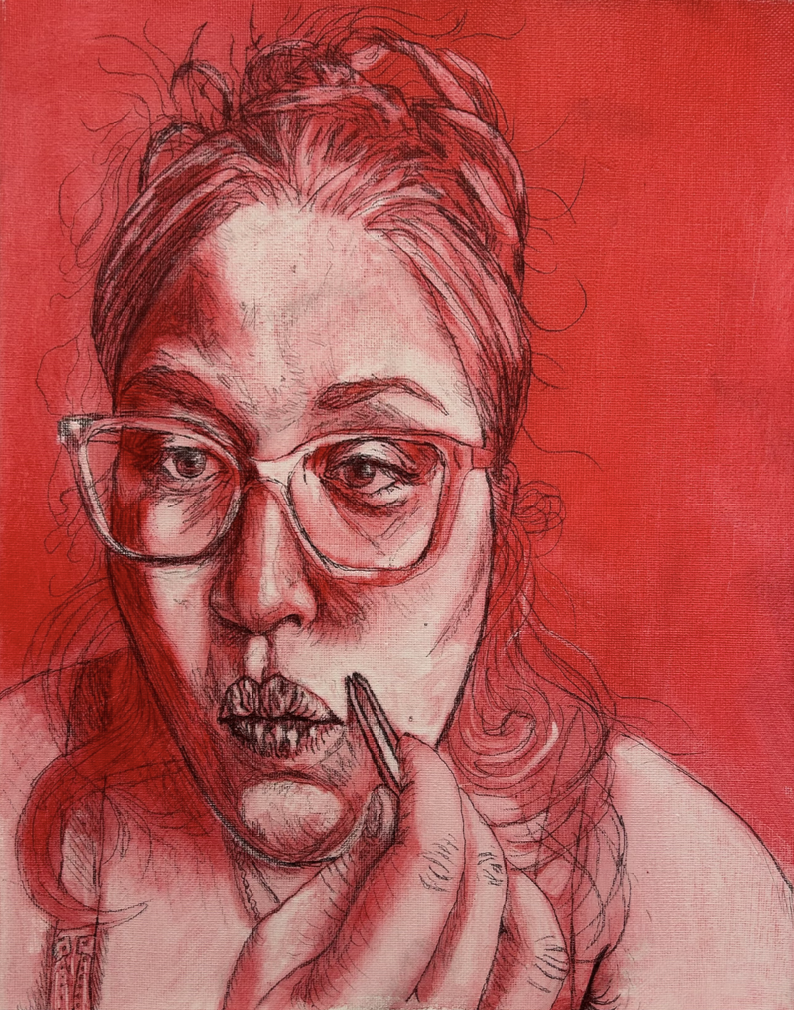
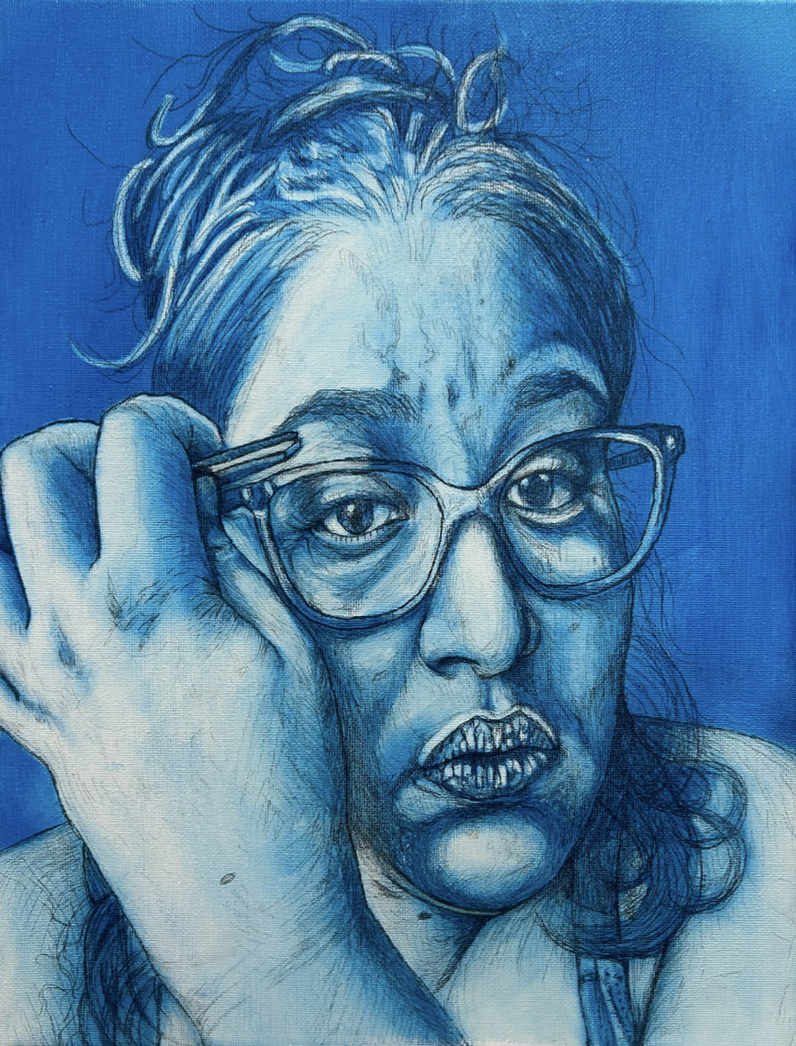
Whilst at PSAS Yasamin intends to produce a series of works that highlight the narratives hidden and erased from our contemporary society and our inherited history. The works produced will introduce and establish diverse identities and realities unfamiliar to the Australian western audience. During her residency Yasamin plans to develop a series of large and small-scale mixed-media sculptural self-portrait and portrait paintings, focusing on queer feminist theory, body-politics and anti-colonial discourses. The paintings function as visual commentary representing the struggle for bodily autonomy, safety, self-determination, educational and professional opportunities for women and queer people within Iran,
focusing on the current gender apartheid enforced by the regime in Iran and by the Taliban in Afghanistan.
RESIDENCY JOURNAL - January 2025
Transitioning into the Residency
To say these past two months have been a whirlwind is an understatement. At the start of the year, I was preparing to return to university and complete my Honours degree. Everything changed in an instant when I received an email from PS Art Space asking me to give them a call—they needed to discuss something with me. With my heart racing as I dialled their number, I had no idea what to expect. On the other end, they explained that the originally selected artist could no longer participate, and as their second choice, the opportunity was now being offered to me. I was completely caught off guard—shocked, speechless, and overwhelmed all at once. I had never expected to be chosen, let alone as an alternate, but here I was being given an opportunity I never saw coming.
It was one of those moments where time feels like it pauses, like the universe stops for just a breath to let the news settle into your bones. Then, a rush of adrenaline. Exhilaration. A sudden and overwhelming sense of gratitude. I rushed to Fremantle to see the studio for the first time, my mind already racing with plans—where my materials would go, how I would structure my workspace, how I could create a space where my art could take shape, unfettered and unapologetic. This opportunity would not have been possible without the encouragement of my Honours supervisor, Dr. Lydia Trethewey at Curtin University, who urged me to apply. I submitted my application on a whim, not knowing what to expect. My philosophy has always been: Apply, apply, apply! Apply to everything you can, because you have nothing to lose and everything to gain.
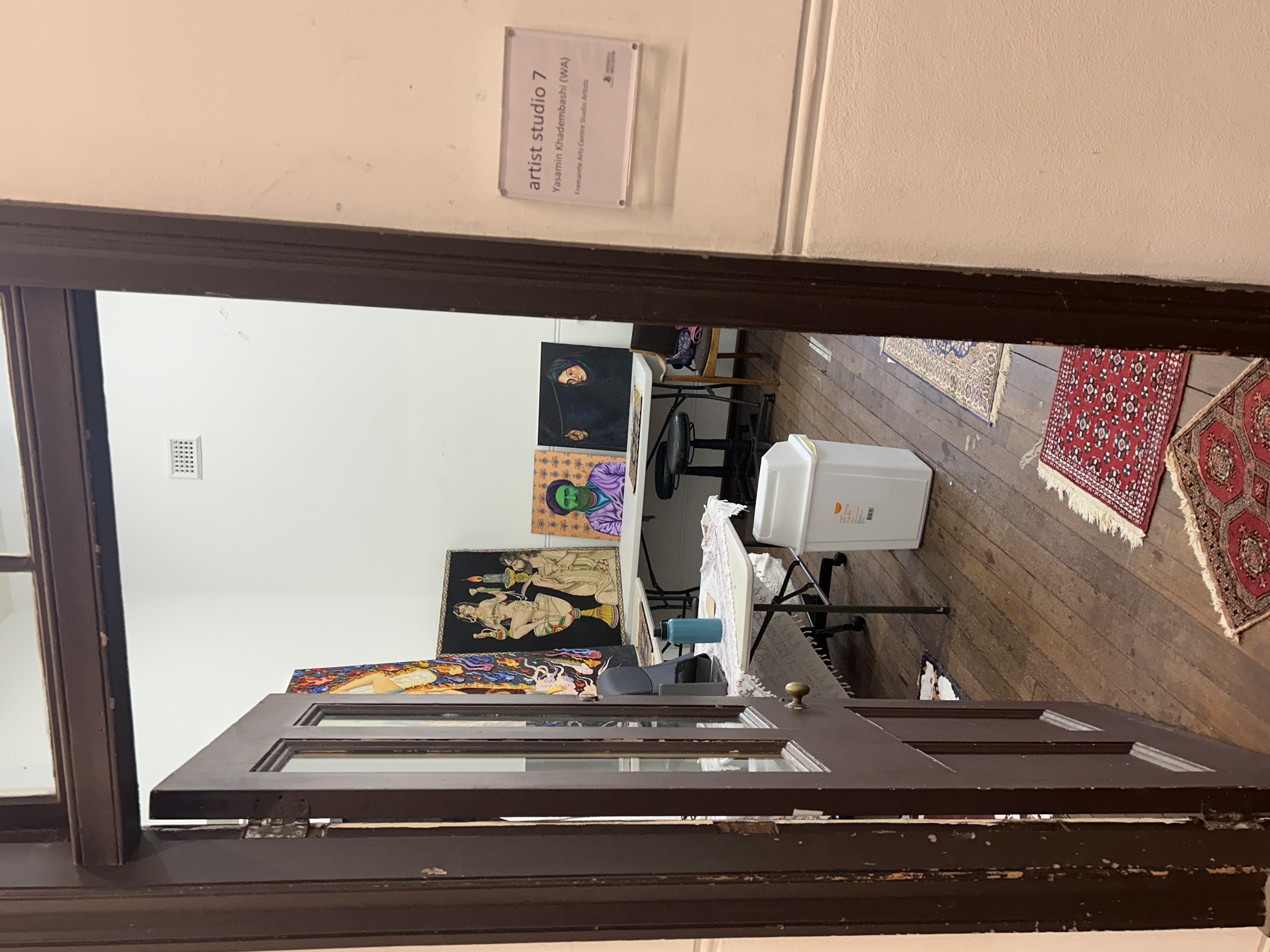
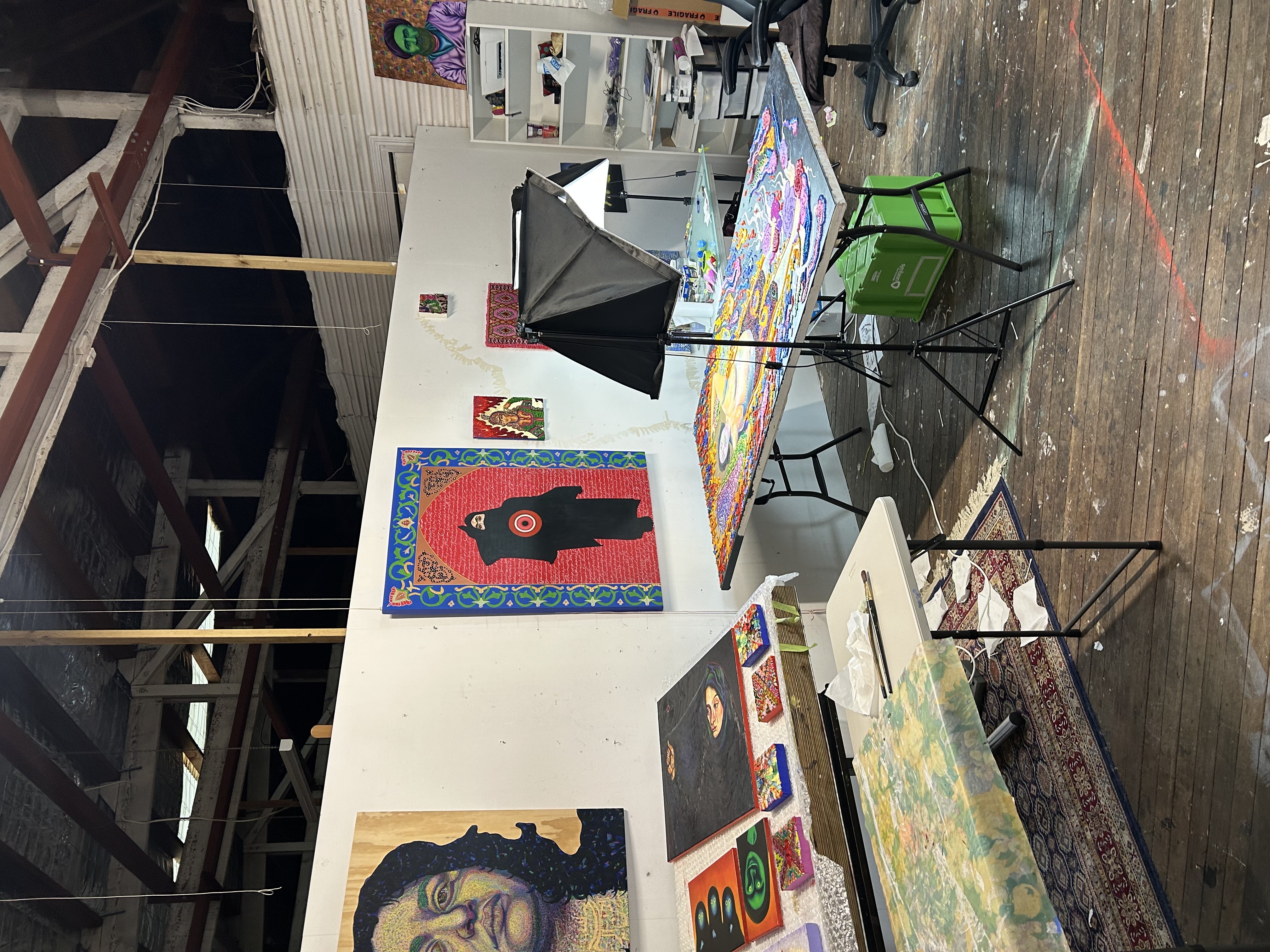
Creating a Studio That Feels Like Home From mid-January until the end of the month, I gradually moved into my new space, filling my car with boxes each week—brushes, paints, piping nozzles, pastels, charcoal, fabrics, threads, synthetic eyelashes, and my treasure trove of rhinestones and synthetic pearls. Laying out my Persian carpets on the floors, arranging my works around me, and organising my tools into drawers and shelves, I felt a deep sense of belonging. The PSAS building itself is a work of art, a historic warehouse in Walyalup’s West End precinct, standing since 1907. My studio is one of 36 within this vast creative hub, surrounded by an incredible community of artists and practitioners. Walking into this space each day, I feel both immense gratitude and an overwhelming sense of purpose. I am truly so grateful and thankful to have this opportunity to be part of such a diverse group of talented individuals within this community at PS Art Space.
Having a dedicated studio separate from home has been revolutionary for my practice. While working from my small home studio had its conveniences, it was also full of distractions—domestic responsibilities were always within reach, making it difficult to fully immerse myself in my
work. Now, in this spacious environment, I can work intensively and iteratively, developing conceptually complex, multi-layered, multi-material artworks without interruption.
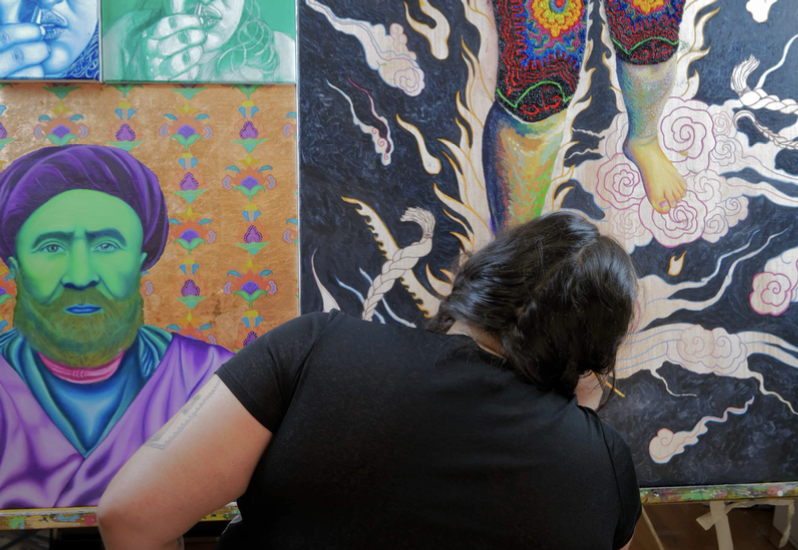
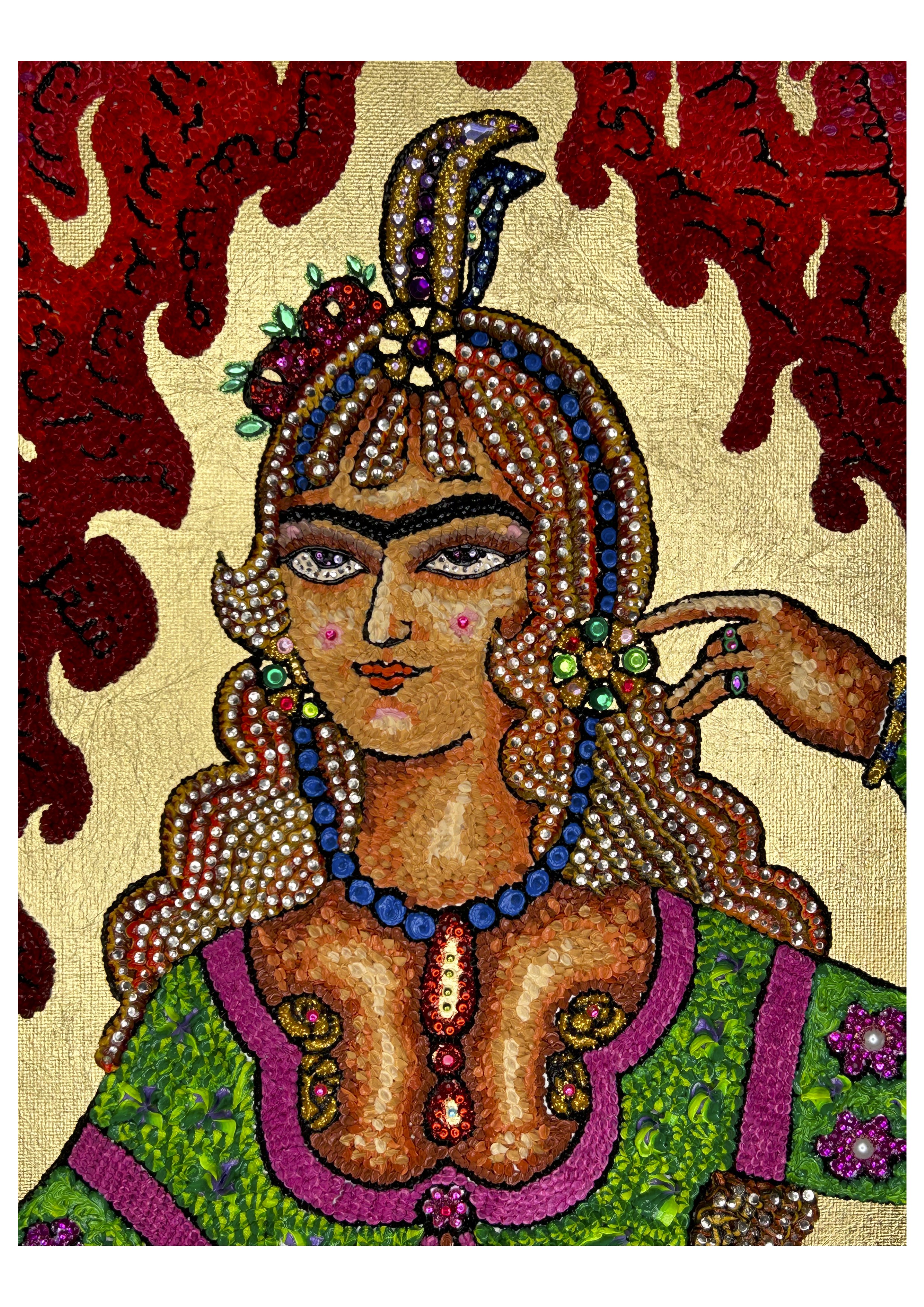
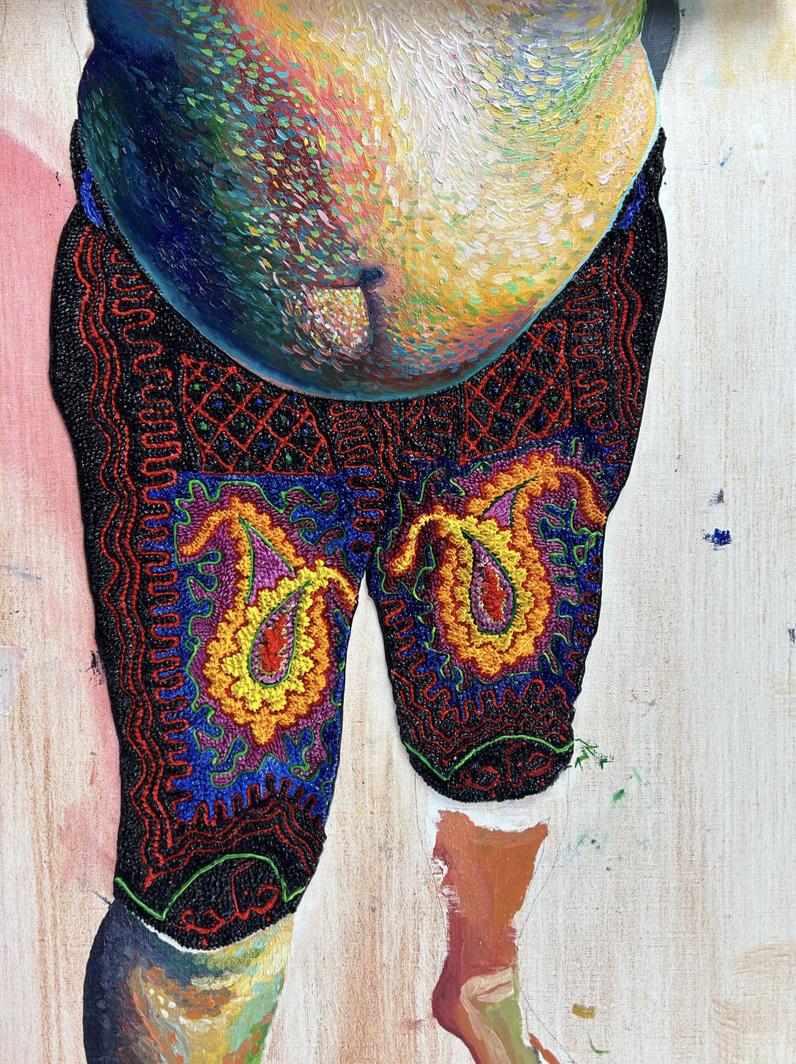
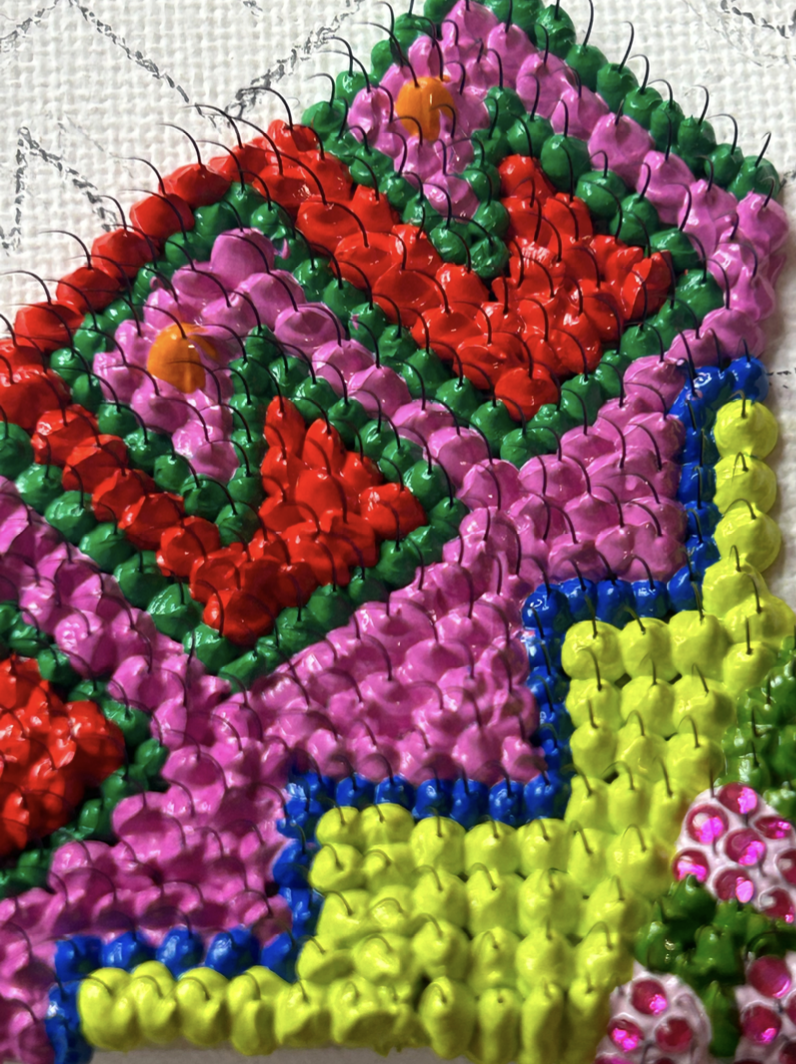
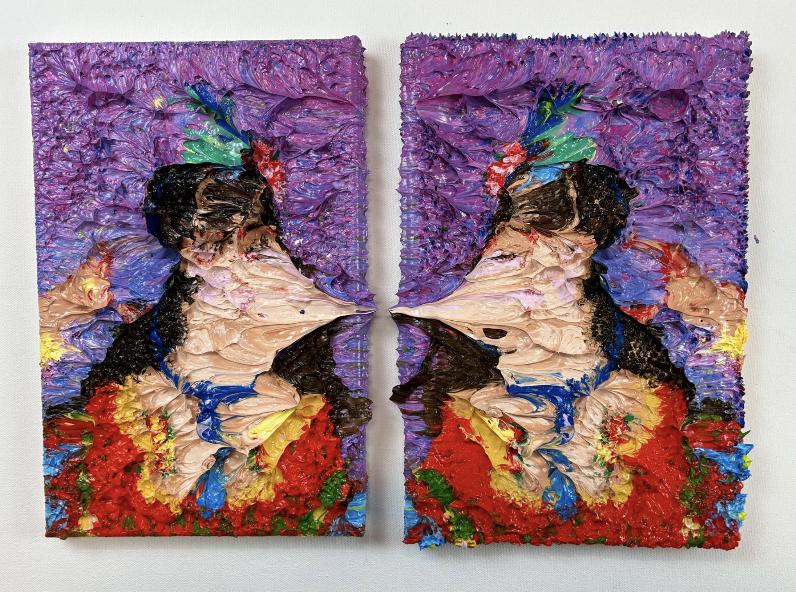
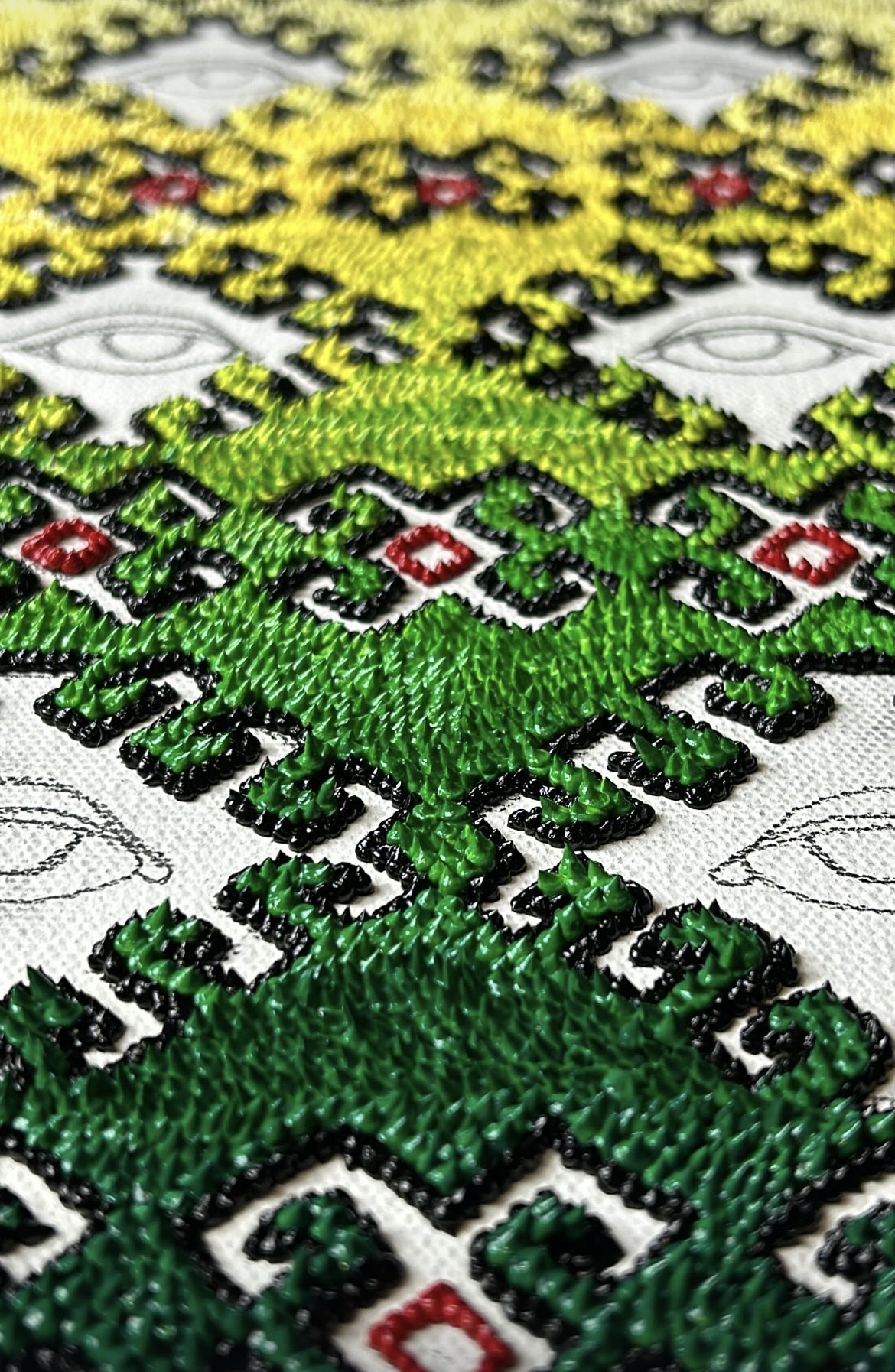
Experimenting with New Methods & Techniques I have spent hours and hours in this space refining my artistic process, expanding my approach through experimental techniques. My current project pairs impasto oil painting piped using cake decorating equipment to create richly textured, dimensional surfaces with traditional Persian miniature painting techniques and classical Western European portraiture.
The resulting paintings are tactile and visually striking, blurring the boundaries between painting and sculpture. They embody the queer, the camp, the feminine, the masculine, the grotesque, the beautiful, the powerful, the big, and the vulnerable—a celebration of identities that resist erasure.
This project aims to disrupt Western beauty ideals by celebrating diverse hairier bigger body types, darker features, and other uniquely defining characteristics within the SWANA diaspora. These proposed works aim toconfront and challenge pervasive and ubiquitous cultural narratives by personalising the political. Engaging with the community in Walyalup through this residency, enables me to humanise the identities and people depicted in the artworks, creating a deeper understanding and representation of queer individuals living and existing within Iran, the Middle East and the diaspora.
February 2025
Community & Collaboration: Second Generation
CollectiveFebruary marked my first major collaboration with the Second Generation Collective on their upcoming project, Valley of Love (Vádye Eshghe) at PICA. This project explores themes of poetic epics, culture, identity, spiritual giants, and love. I was honoured to be invited to participate in their creative workshops.
Meeting and working alongside other Iranian artists—many of whom share experiences of displacement and diaspora—has been an incredibly affirming experience. Growing up in Perth during the late ‘90s and early 2000s, I rarely encountered other Iranian people. My parents had migrated to one of the most geographically distant places from Iran, and in many ways, we were learning this unfamiliar terrain together, untethered from our ancestral lands, our family, our language, and our identity and culture. Now, as an adult, being surrounded by fellow Iranian artists feels like a breath of fresh air. The ability to speak Farsi freely, without code-switching or explanation, is something I rarely experienced during my childhood, adolescence, or even early adulthood. This sense of unfiltered connection and cultural understanding reinforces why representation is so vital—not just within the art world, but within broader socio-political contexts.
Art as Resistance & Responsibility
The importance of visibility and representation for Middle Eastern and SWANA communities has never felt more urgent. We are living through a time of brutal occupation, genocide, and systemic erasure. The settler-colonial state of Israel continues its occupation and genocidal campaign against Palestinian people. The gender apartheid in Iran and Afghanistan, enforced by the Islamic Republic and the Taliban, threatens the fundamental rights of women, queer folk and other minorities. The looming dangers of another Trump presidency pose further risks to marginalised communities globally. Here in Australia, the shameful and
cowardly decision by Creative Australia to revoke artist Khaled Sabsabi and curator Michael Dagostino from representing Australia at the 2026 Venice Biennale reflects the increasing silencing of artists and creatives around the globe. In the face of these ongoing atrocities, art is not just expression—it is protest, resistance, and a demand for justice. This moment in history calls for artists to be unapologetically bold, to disrupt, advocate, document, and
create work that challenges systems of oppression.
Looking Forward: Expansion & Exploration
As I settle into this residency, my focus remains on pushing the boundaries of my practice, refining my techniques, and amplifying the narratives that
have long been silenced. This studio is not just a place to work—it is a haven for experimentation, play, and expansion. Over the coming months, I aim to bridge the personal and political, further embedding my works within queer feminist research, bodily autonomy, and de-colonial resistance. Through these paintings, I hope to humanise,represent, and reclaim identities often denied visibility—queer people, SWANA communities, and those resisting oppression. For now, all I want to do in this space is: Create. Make. Explore. Experiment. Play. And push the limits of what my practice—and art itself—can be.
March 2025
Controlled Chaos: A Method of Resistance
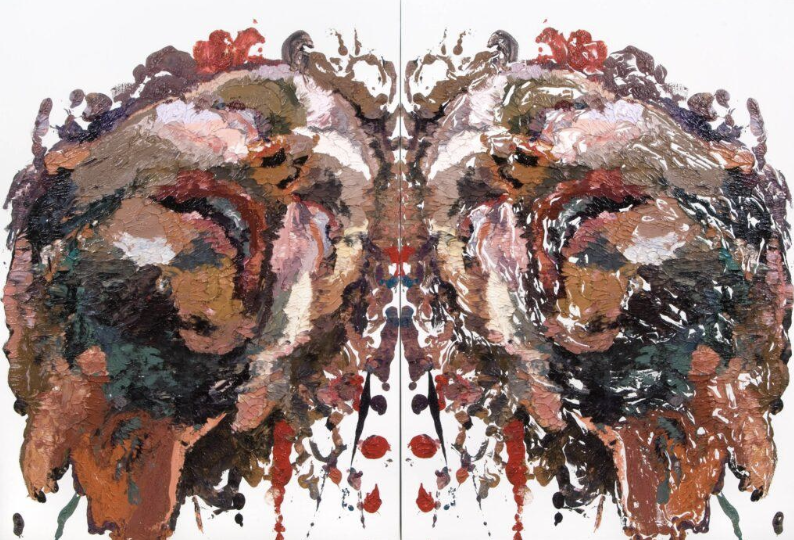
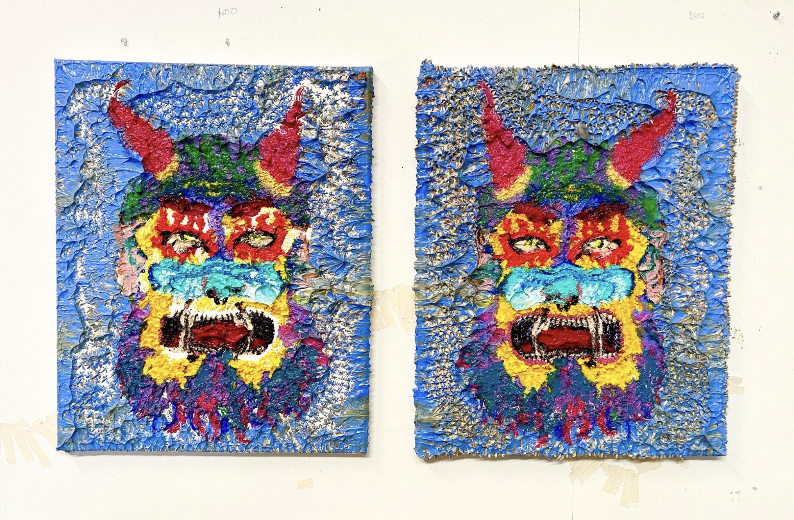
March signified the first time during the residency where I was able to fully focus on research and experimentation, honing in on a specific method and medium I initially began exploring during my previous residency at MJAC. This technique entered my practice quite organically, rooted in a memory of watching a short film or documentary years ago on the artist Ben Quilty. In it, Quilty worked with impasto oil paint, building thick, luscious layers to create expressive and visceral portraits. The most magicalmoment for me was when he completed a work, then picked up another canvas of the same size and pressed it directly onto the finished painting. This act left behind a mirrored impression—an echo of the original.
This gesture of both duplication and destruction profoundly impacted me. It reminded me of the simple inkblot tests we used to do as children: choosing our favourite colours, placing them at the centre of a page, folding it in half, and unfolding a completely new mirrored image—familiar, yet entirely transformed. There was something deeply nostalgic and instinctual in this act. But what resonated even more was its metaphorical weight. The act of altering or even ‘destroying’ what is perceived as beautiful or precious became a powerful visual metaphor that closely aligns with the conceptual frameworks of this project. My practice often interrogates the construction—and deconstruction—of identity, particularly through the lens of gender, queerness, displacement, and diasporic experience within SWANA and Muslim communities. In this context, the method took on new meaning.
To create something whole, only to distort, flatten, or fragment it, mirrors the lived experiences of women, queer, and trans folk—those who areconstantly navigating systemic violence, silencing, and social erasure. The imprint left behind on the second canvas becomes symbolic of how we’re shaped by external forces: culture, religion, patriarchy, white supremacy, heteronormativity. These forces press against us until we’re no longer sure which version of ourselves is the ‘original and which is the impression. The ephemeral and transformative nature of the process is what drew me in most. It evokes the fragility of memory, the instability of identity, and the tension between visibility and disappearance. The original image is never preserved in its entirety—yet it is not entirely lost either. What remains is a trace, a ghost, a new form that carries with it all the weight of what came before. It’s a process of loss, but also one of resilience and regeneration.
By surrendering to the unpredictability of this technique, I am relinquishing control—mirroring the lack of control many of us experience in our bodies, in the narratives told about us, or in the places we are allowed to exist freely. The method became not only a medium of making, but a conceptual strategy that deepened my understanding of this project’s themes and allowed the work to evolve in ways that felt urgent, intuitive, and deeply personal.
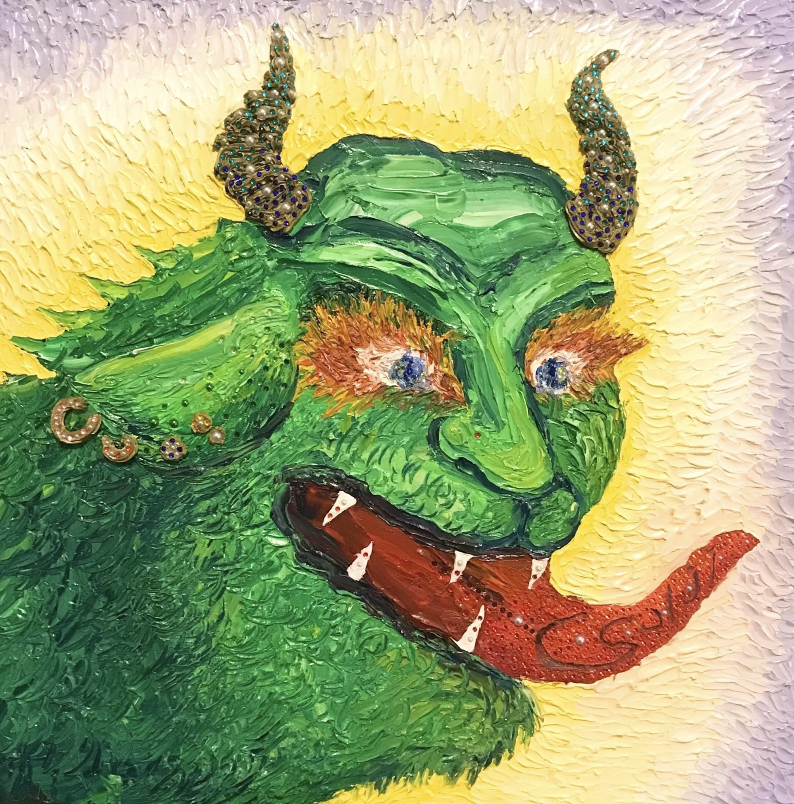
This month, I leaned more fully into the material and conceptual possibilities of my Rorschach painting method—testing its limits, its failures, and its potential for transformation. Building on my initial explorations, I turned to one of the most enduring mythological figures in Iranian and Islamic history: the Jinn. The Jinn, often seen as a demon, spirit, or trickster, became a vessel through which I could continue pushing the boundaries of figuration, abstraction, and storytelling within my practice. My fascination with Jinn dates back to 2022, when I created my first impasto painting of one. That work inadvertently sparked my obsession with the physicality of impasto oil paint—its density, its tactility, its resistance. One of my art heroes who is known for his Jinn’s, is renowned artist Khadim Ali, who has deeply explored and reimagined the subjectivity of the Jinn in his work. From sprawling murals to delicate watercolours and intricately woven tapestries, Ali’s art draws from Persian miniature painting, Islamic mythology, and calligraphy to reclaim the Jinn as a symbol of resistance, exile, and duality. His practice has been foundational in shaping how I engage with myth as both metaphor and medium.
With this third Jinn painting, my intention was to test my current Rorschach-inspired technique more rigorously and resolve an ongoing issue: the transference of the painted image onto the second canvas. Initially, I assumed the problem lay in the angle or pressure of the pressing process. But after repeated trials, I discovered that the inconsistency stemmed from the drying time of different pigments—especially the piped acrylic mediums I use. Some areas were drying too quickly, forming a thin film that prevented a clean transfer. I learned that to achieve the best results, the entire image needs to be piped within one to two days. Any longer, and the paint loses its ability to adhere properly, compromising detail and clarity.This discovery presents a new challenge, especially when working on large-scale canvases (up to two metres), where intricate Persian-inspired designs depend on fine detail and decorative density. I wouldn’t call the outcome of this painting a success in terms of final image resolution—but it wasn’t a failure either. It provided essential insight into how this method functions under pressure, and how the materials respond to time, touch, and surface. Another unexpected issue arose from the paint’s volume: when two fully piped canvases are pressed together, the unevenness and density create a kind of suction. This prevents the paint from sticking evenly, making the transfer irregular. Going forward, I plan to leave the background flat and focus the piped paint on the subject only. I’ll also work to smooth the surface more deliberately to prevent air from getting trapped between the layers. Wish me luck!
April 2025
The Divine, The Monstrous, and The Human
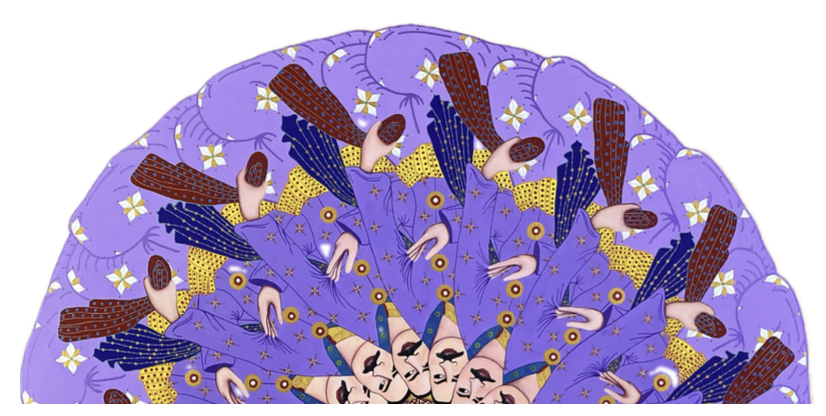
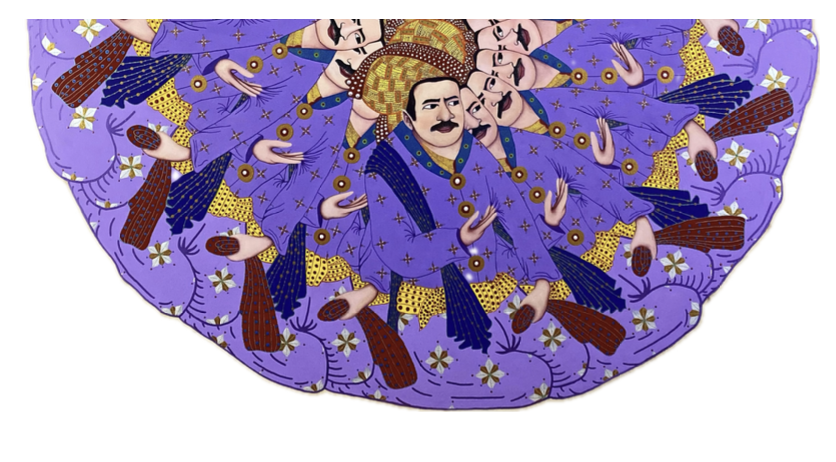
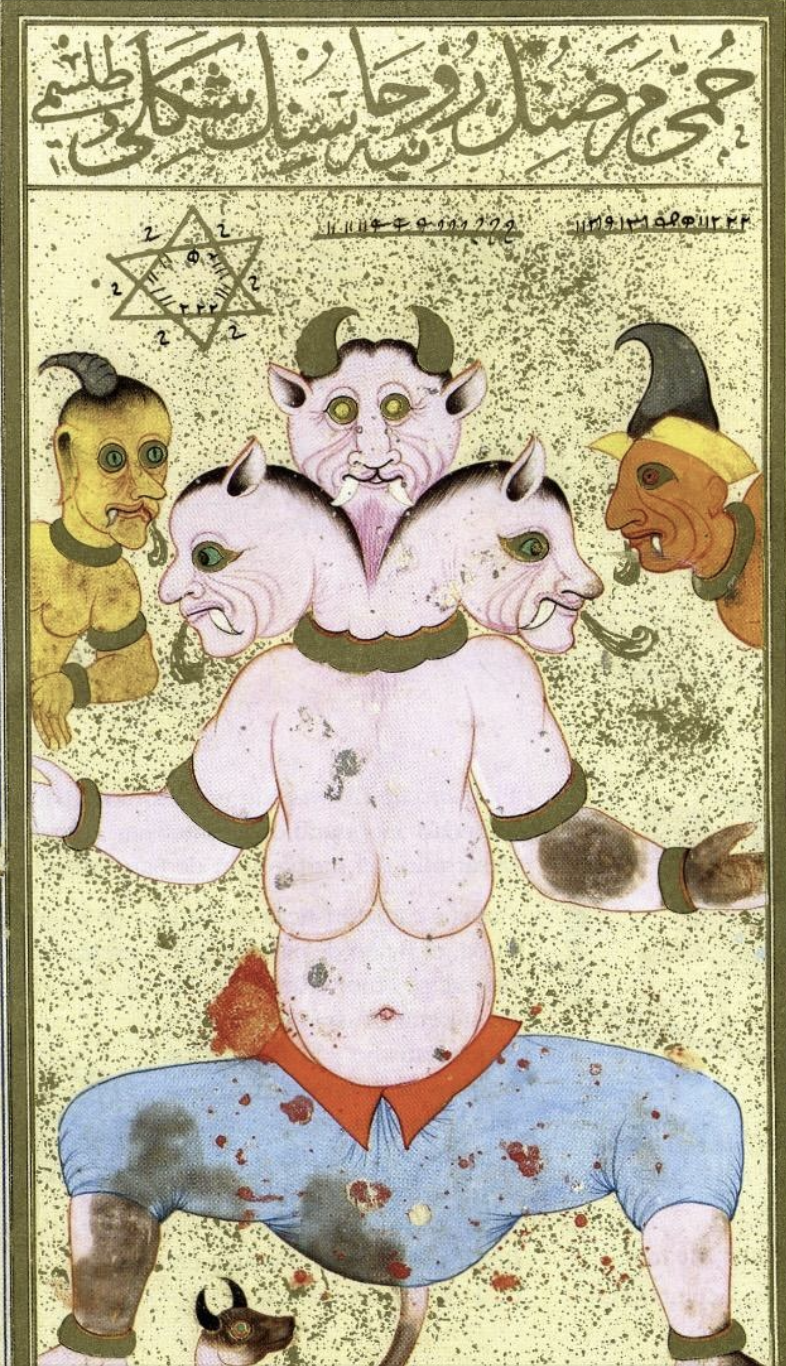
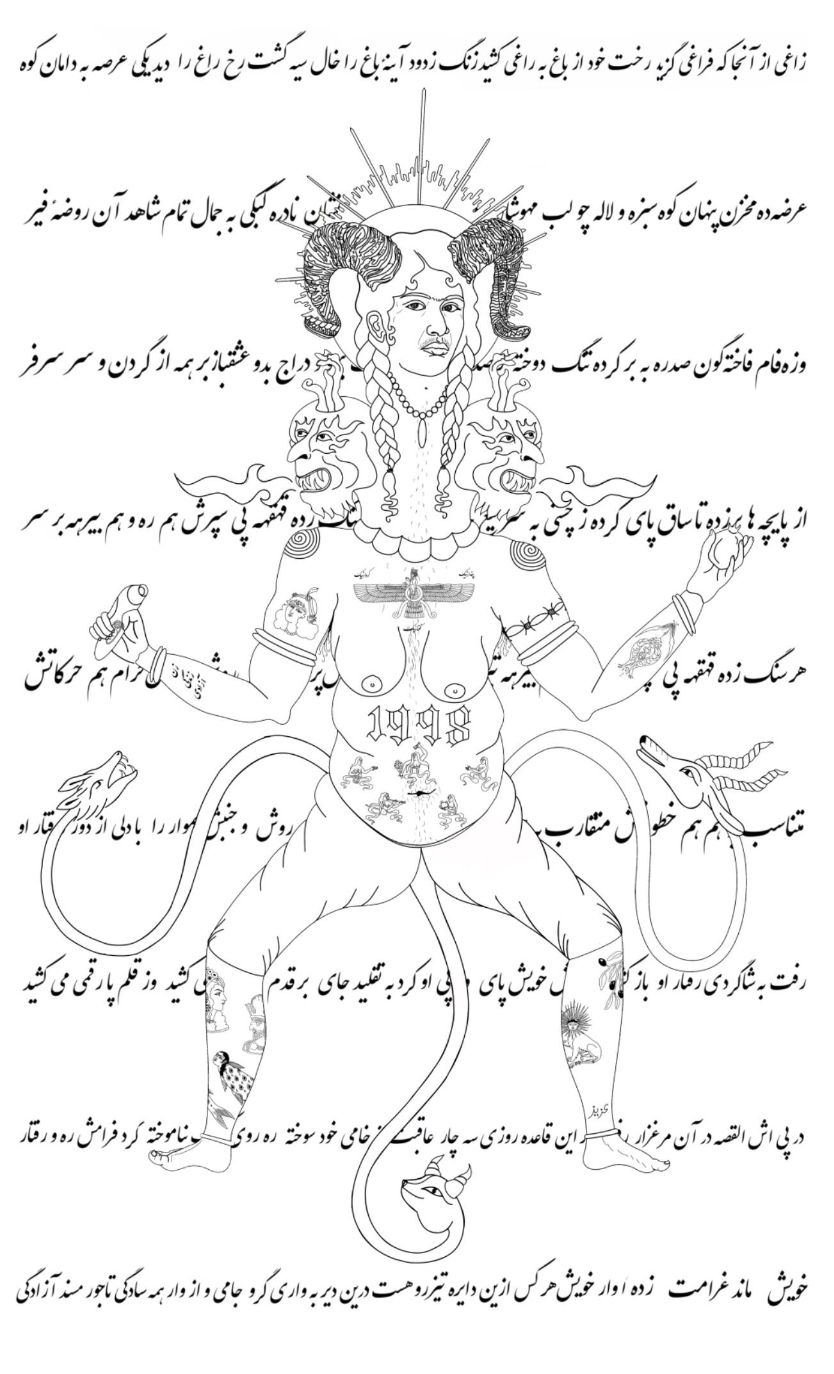
By April, I began developing the design for one of three major paintings I plan to complete during this residency. This work continues my ongoing exploration of mythology through a distinctly queer and feminist lens, drawing deeply from Persian and Islamic iconography while radically reinterpreting it. Inspired by an Ottoman manuscript illustration of the three-headed Jinn Huma by Mehmed ibn al-Hassan Emir Suûdî, the figure I’ve envisioned embraces multiplicity—embodying both the divine and the monstrous, the mythical and the real.
At the heart of the composition is a purposeful fusion: two Jinn heads are directly connected to a central human figure, collapsing the boundary between imagined and lived experience. The divine, feared, or monstrous becomes tangible, intimate, and embodied. Here, the Jinn is not just a folkloric spectre, but a vessel for rage, defiance, and sacred transformation.
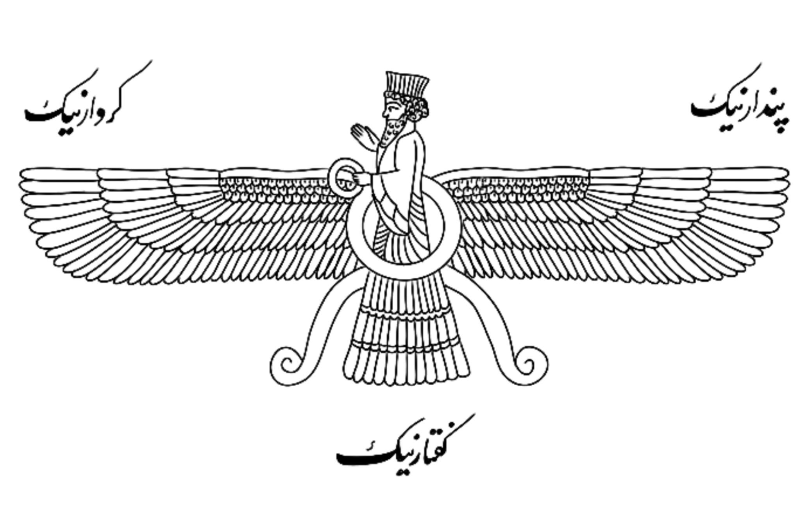
Their presence challenges the viewer’s gaze and reclaims space for marginalised bodies—particularly those of queer women and gender non-conforming people who navigate both visibility and surveillance. The figure itself is bold, tattooed, and intentionally excessive. The tattoos function as a living archive—markings of identity, memory, and survival. From the ancient Zoroastrian Faravahar to the defiant “1998” sprawled across the belly, every symbol carries personal and cultural weight. In Iranian and Islamic contexts, tattoos are often taboo—seen as transgressive or impure. Here, they become declarations of autonomy. The body is not modest, but sacred and unruly—resisting erasure and celebrating its right to be adorned, decorated, and seen.
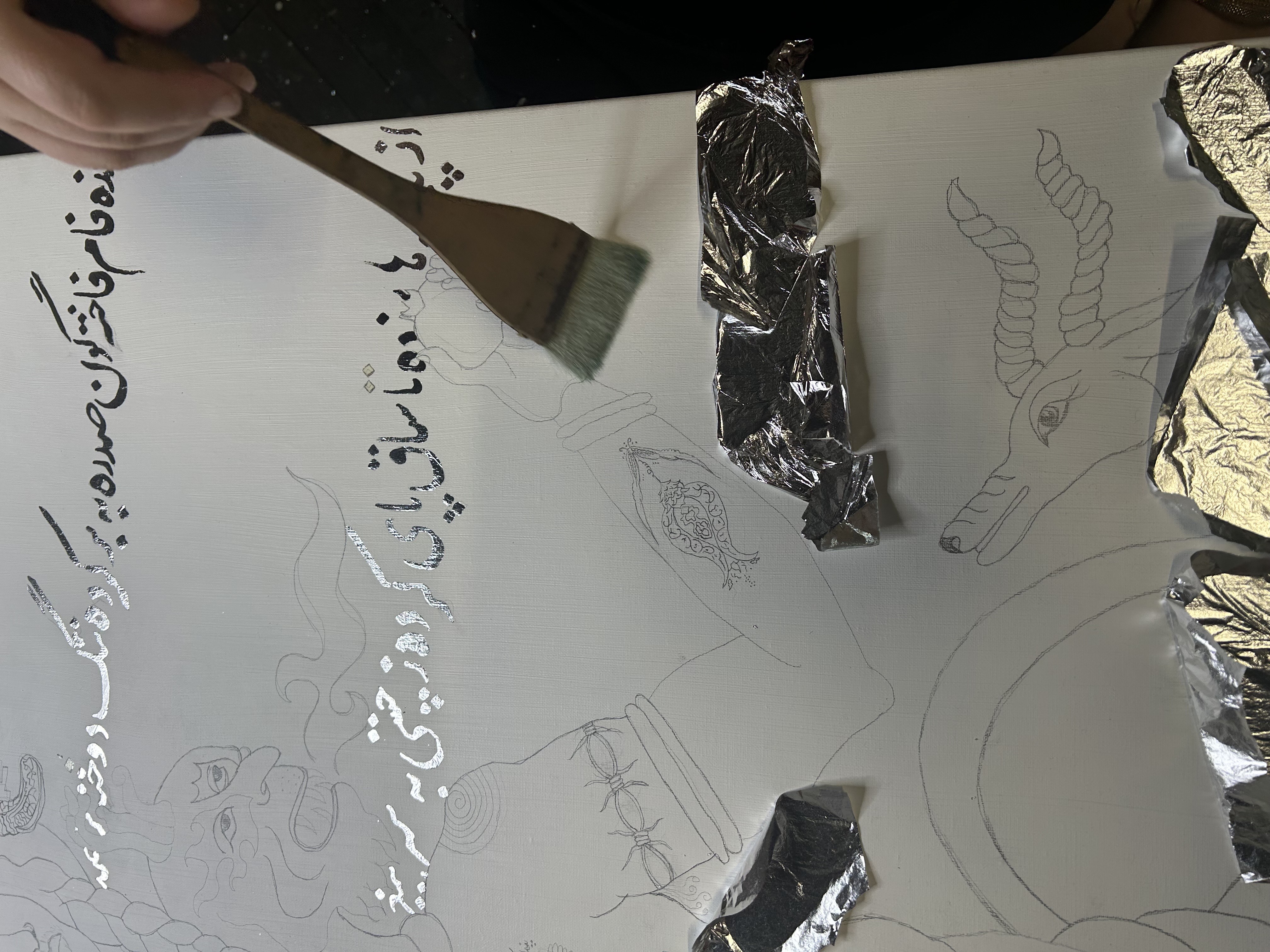
Surrounding this central figure is a precise arrangement of Persian calligraphy, drawn from the fable The Crow and the Partridge—a moral tale that warns against changing oneself to appease others. The text lines the figure in even, rhythmic rows like a protective aura, echoing illuminated manuscript traditions where language and image coalesce. But here, the script is not just decorative—it’s spellwork, boundary, and barrier. Illegible to some, it becomes a quiet act of refusal; legible to others, it offers connection, intimacy, and shared knowledge. Formally, I sought to mirror the balance of classical manuscript design while infusing it with subversive energy. The figure’s pose is symmetrical yet volatile, her limbs sprouting animal-headed tails that gesture to chaos and transformation. I first hand-sketched the composition, working intuitively on paper before transferring it into Procreate, where I refined the detailing and structure. The digital process allowed for precision and intricacy, echoing the ornamental logic of Persian design. Every element—gesture, symbol, pattern—was chosen with care to disrupt, reclaim, and expand.
This painting is about more than just visibility—it’s about rewriting visual language and reclaiming space within traditions that historically excluded us. The grotesque becomes sacred. The Jinn, once feared, becomes our mirror. And the figure at the centre—inked, enraged, mythic—takes up space where saints and warriors once stood.
May 2025
This month has been an absolute whirlwind—probably the busiest I’ve ever been—but it’s also felt like a dream come true. May marked the beginning of my second residency at Fremantle Arts Centre, and funnily enough, I was placed in Studio 7 at both PSAS and FAC—clearly, now its my lucky number.
Alongside kicking off the FAC residency, I also completed one of the most intense projects I’ve ever worked on: my grant application for funding my solo exhibition. This process was brutal. The amount of research, editing, budgeting, and hoop-jumping involved was low-key insane—and all for something that statistically isn’t likely to get funded (the success rate sits at 18%). It’s deflating to put in that level of work—to tick every box, justify every dollar, and finesse every sentence—knowing there’s a good chance it still won’t be approved.
It’s moments like these where the grind can feel almost pointless, where the burnout feels bone-deep. Working without consistent funding or even a livable wage in this industry can be deflating. But still, I wouldn’t trade what I’ve built. I remind myself that we’re all on different paths, and that it’s okay if mine looks different. Something I don’t often talk about is the fact that I’ve been a carer since I was 10. Out of respect for my family’s privacy, I won’t go into details, but this has been a fundamental part of my life and something that deeply shapes my perspective. It’s taught me patience, kindness, and to never assume anything about someone’s journey. You never really know what people are carrying.
Balancing multiple projects, two residencies, paid work, and family responsibilities can feel like a Herculean task. But I don’t take it for granted. My responsibilities as an artist and as a family member are equally central to who I am. My unwavering love and loyalty to my family are rooted in my Iranian heritage, where kinship is everything. Our family dynamic may be unconventional, but it is radical in its love, generosity, and mutual care. So, if you ever catch yourself spiralling in self-comparison, I hope you give yourself some grace. Everyone’s carrying something. Keep grinding—your time will come.
I’m profoundly aware of how rare and precious it is to be openly queer within a Middle Eastern household. In many cases, being visibly queer in a SWANA (South West Asian and North African) or diasporic context can result in rejection, isolation, or even violence. The fact that I’m able to live authentically, be embraced by my family, and pursue an artistic practice rooted in queer identity is something I never take for granted. I hold that privilege with deep respect and tenderness—because I know that for many in my community, it’s not a reality. That awareness fuels my practice, and it’s part of why I’m so committed to creating work that makes space for those who can’t yet safely take up space themselves.
Now, back to the chaos that is the studio. Dividing my work between PSAS and FAC has been the best thing for my brain. It helps me manage the sheer scale of what needs to be done. Some works are nearly finished, some are mid-process, and some are still sitting in sketchbooks as vague ideas. I don’t recommend doing two residencies at once (ever), but weirdly, it’s helped me compartmentalise. I’ve dedicated the FAC studio to my paint-piped, carpet-inspired works, while PSAS is reserved for my large portrait paintings. My hope is that by keeping these spaces distinct, I’ll manage to complete everything in time.
May has also brought with it a whole new layer of anxiety. Don’t get me wrong—I’m incredibly grateful for these opportunities—but with them comes the pressure to deliver. Most of it is self-imposed. The perfectionist in me always wants to tweak, finesse, adjust. The work is never “done.” I’m constantly worrying about archival quality—Will the metal leaf tarnish? Will the rhinestones fall off? Will the synthetic hair or pearls disintegrate over time? When your work relies on unconventional materials, experimentation becomes high-stakes. You want spontaneity, but you also want control. You want permanence in the ephemeral. It’s a complicated place to sit in.
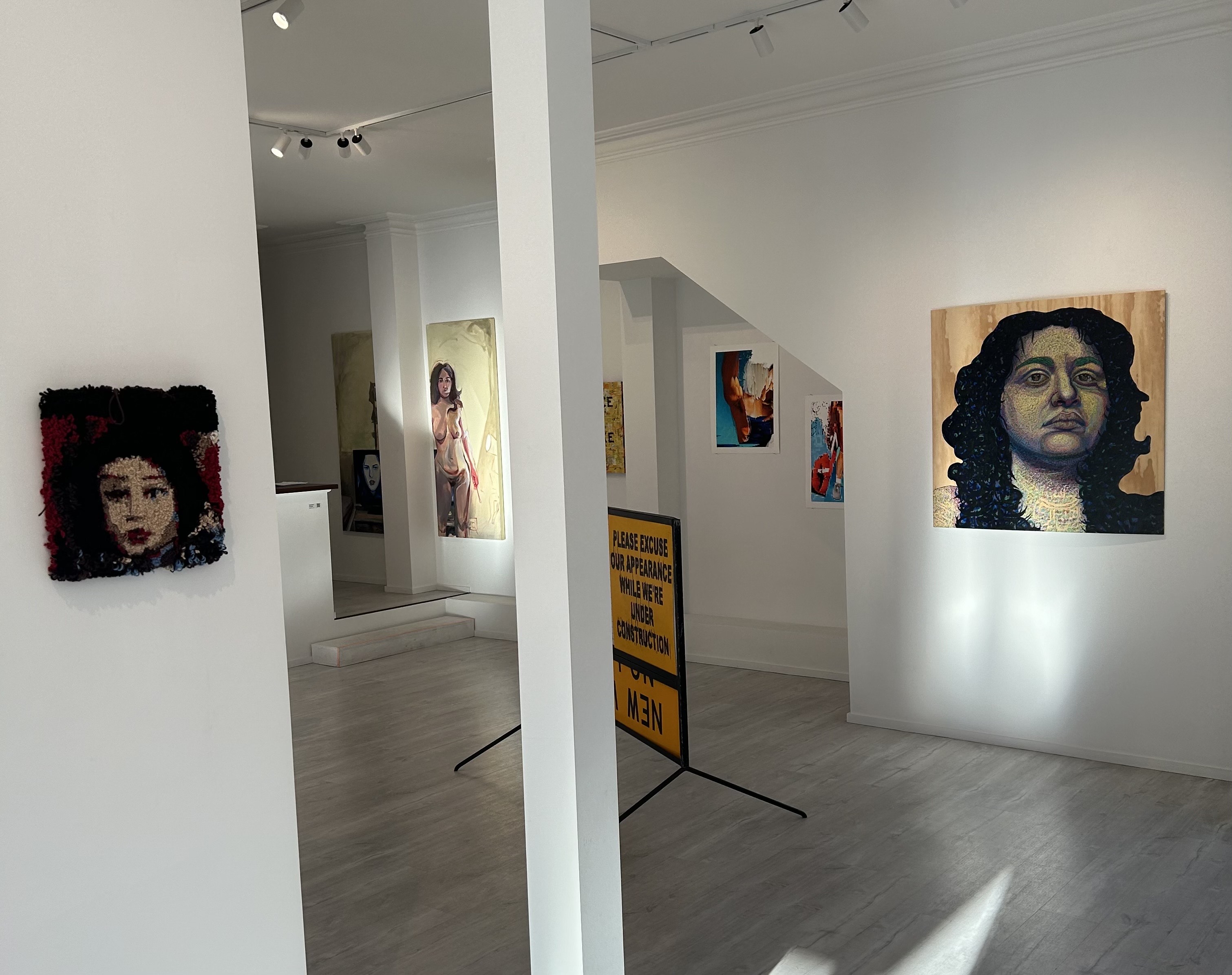
One of the most monumental experiences this month was the opening of In Spite (of), a group exhibition curated by Dr Lydia Trethwey at Nyisztor Studio. The show featured an incredibly talented lineup of artists: Emily Palmer, Bethan Power, Nina Raper, Leila Simpson, and Yasmine Soto. Lydia’s curatorial essay put words to many of the emotional and political undercurrents running through the works. She wrote, “Queer joy is not inspirational porn; critique of Islamophobia is not consumable. And yet, the viewer can easily choose to consume marginalised experiences. Many of the artworks in this show navigate such tensions, simultaneously inviting the viewer in, and pushing them out.” The exhibition sat with those contradictions and held space for both beauty and discomfort.
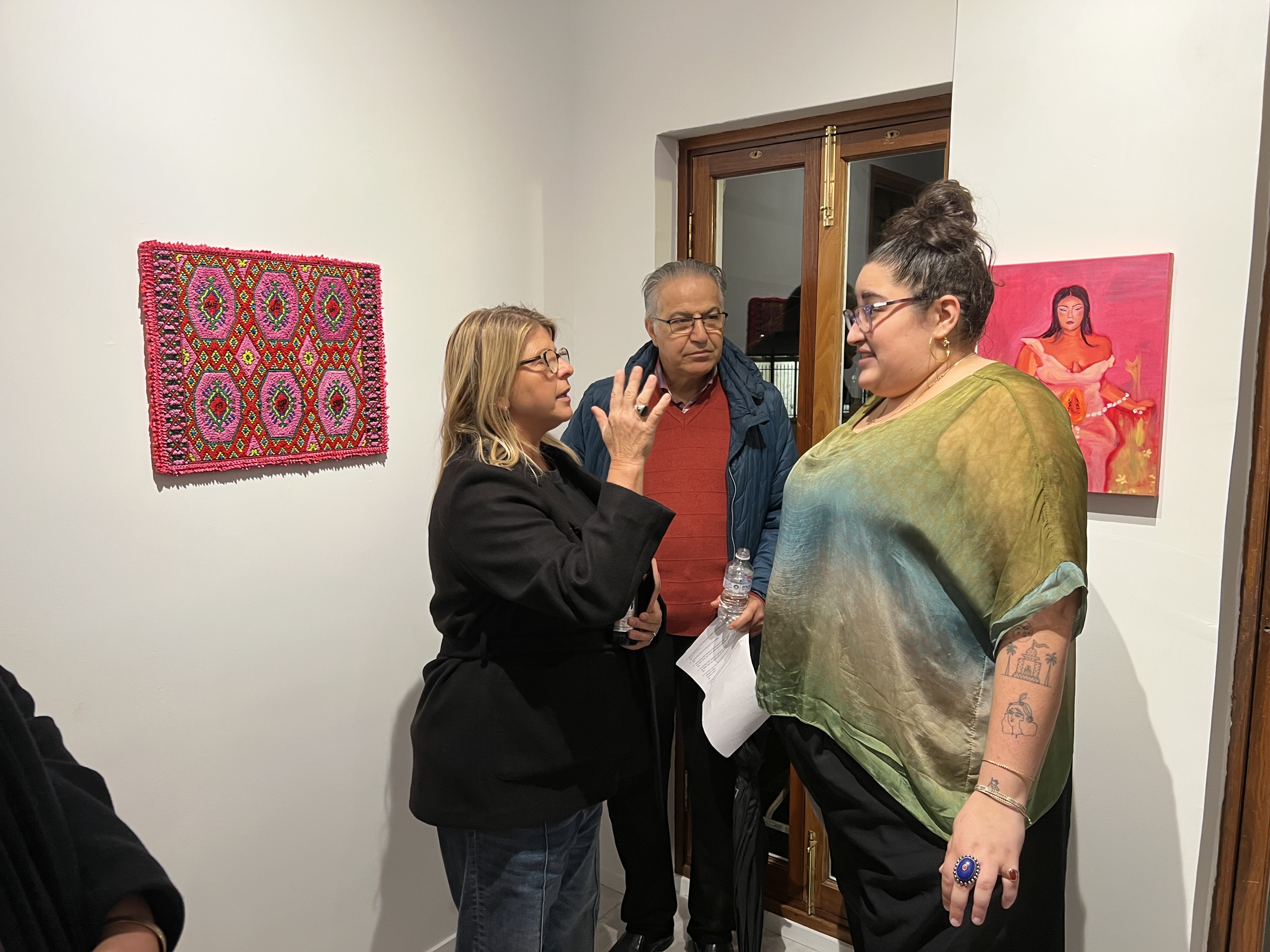
The opening night, on the 24th of May, was one of the most validating moments of my career so far. I had no idea what to expect and was genuinely nervous—but the turnout blew me away. Being surrounded by friends and family, many of whom have been with me since I was a kid dreaming of being an artist, was incredibly emotional. They’ve seen the whole arc—from the first scribbles to now—and have never wavered in their support.
I’m quite introverted by nature, so speaking with so many people that night was overwhelming in the best way. The curiosity and generosity people brought to the works—asking questions, engaging deeply—was the highlight of the night. Thank you to everyone who came, supported, and shared that moment. It meant more than you know.
Working between two studios in Fremantle—PSAS and FAC—has helped me build strong relationships with local artists, curators, and institutions. It’s opened up new conversations, new possibilities. And even though it’s exhausting, it’s also exactly where I want to be. So here’s to the exhaustion, the joy, the fear, and the hustle. We move.
June and July 2025
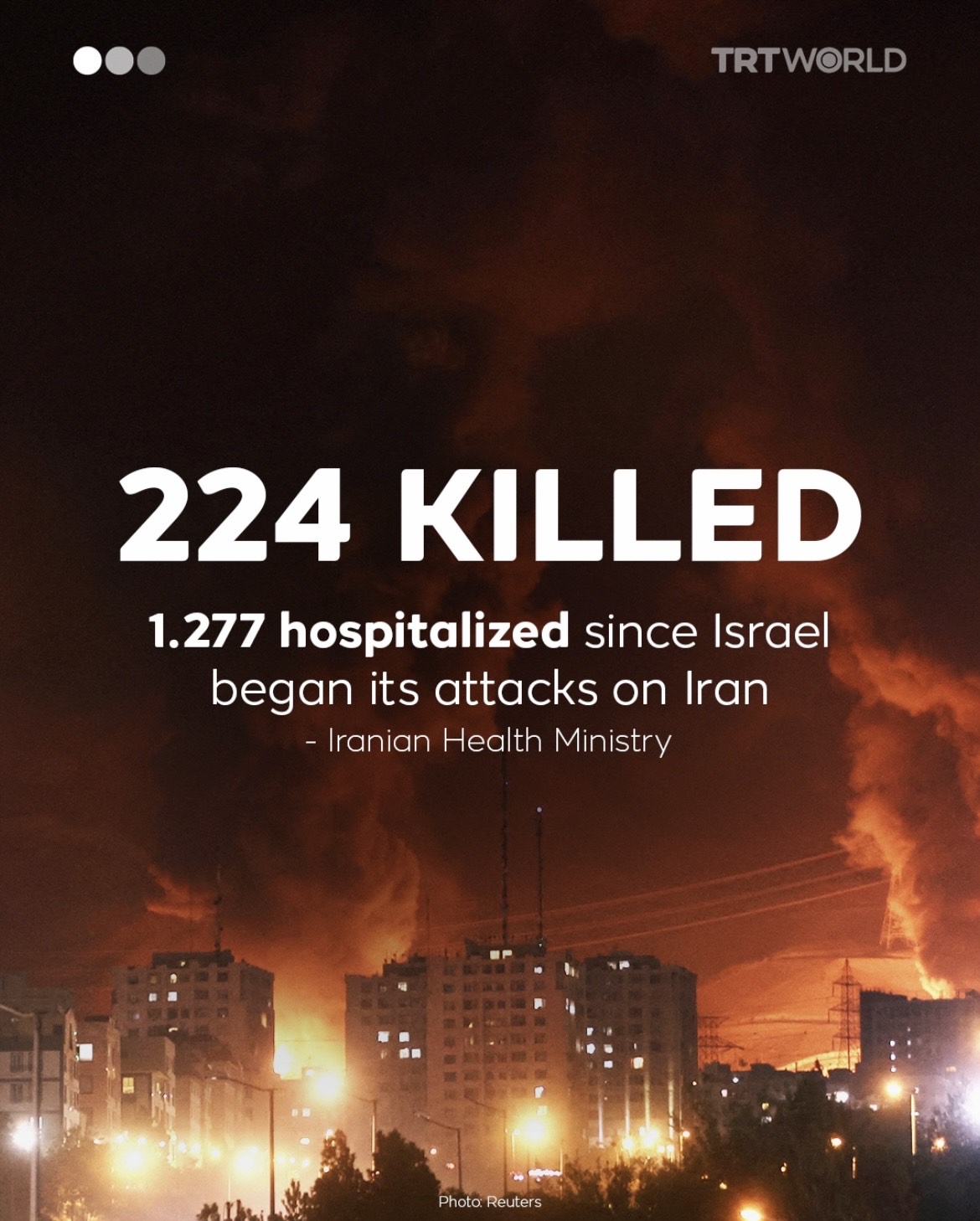
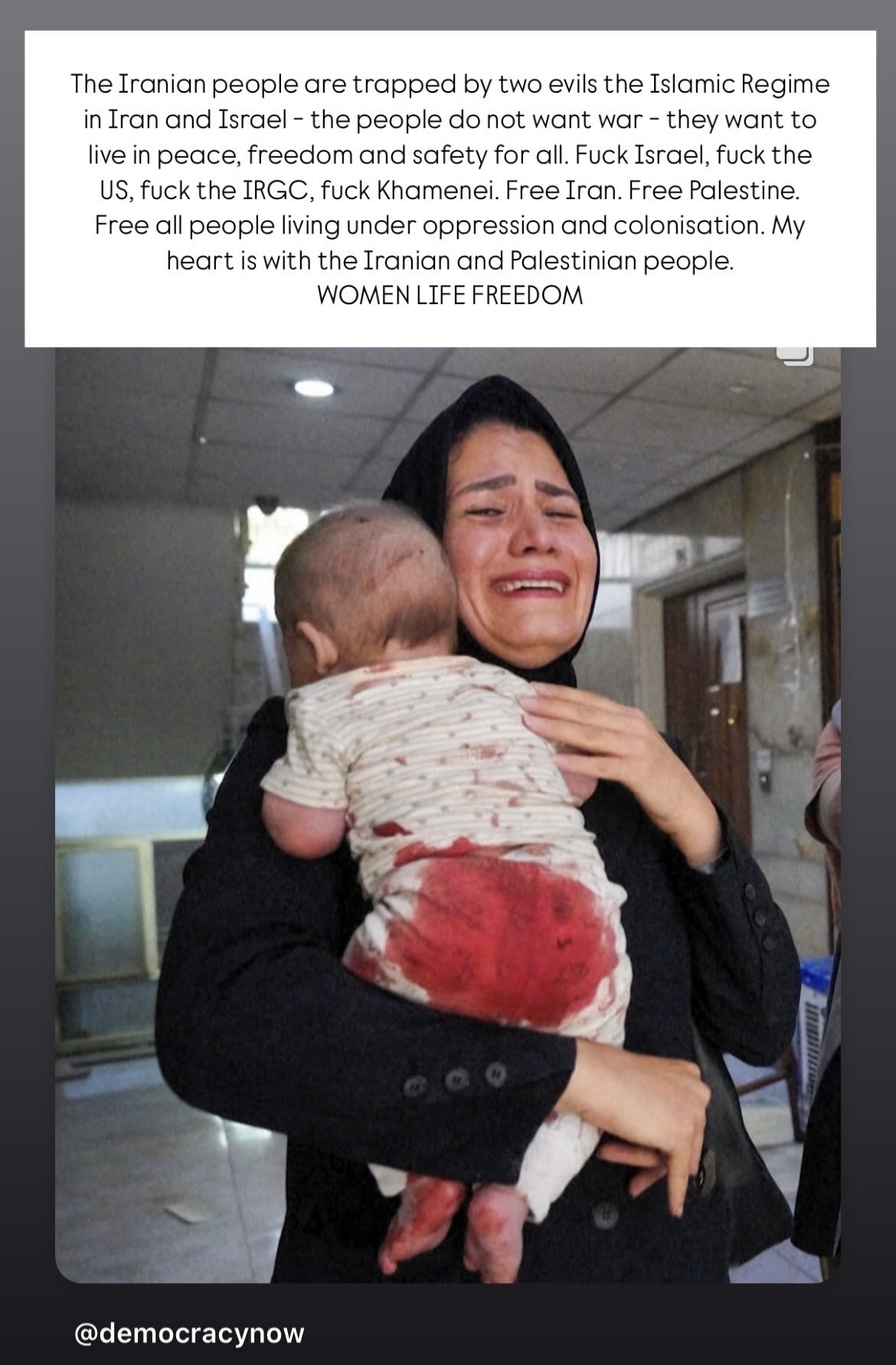
The beginning of this month was stained with devastation. The illegal Israeli occupation bombed Tehran - brutally, without provocation. Watching videos of apartment buildings turned to rubble, civilians pulled from the wreckage, bodies wrapped in sheets - these weren’t just faceless tragedies online. This was Tehran. This was my family’s city.
My great uncle and cousin live there. I’ve only met them once in my life, but we’ve built a relationship through phone calls and video chats over the years. Even at a distance, they’ve always held a deep and grounding presence in my life. They’re two of the last direct connections I have to my mum’s side of the family in Tehran, to a whole lineage I’ve only ever known from afar. So when the bombing started, my heart sank. I felt sick with fear.
I know I don’t usually write about this kind of things here. Normally I focus on my art - what I’m working on in the studio, what materials I’m experimenting with, how the body of work is forming. But this month? Honestly, it’s been hard to function. I’ve been waking up every day to footage of bombs, dead children, grieving parents. It’s relentless. And the propaganda that follows it? Even worse. The twisting of narratives, the erasure of context, the demonisation of entire populations. It’s enraging. It’s exhausting.
I don’t think people realise what it’s like to try and make work when your people are being killed. When you’re part of a community that’s constantly under attack - physically, culturally, politically, spiritually. I don’t think people who have never had to fear for their country or their people understand what it feels like to function, to try to keep moving, to make art - while the place you come from is being bombed, while the people you love are under siege. And on top of that, to be seen as the aggressor. To be looked at with suspicion, like your grief isn’t valid, like your people don’t deserve empathy. When will they see us as human beings? When will they leave us to rebuild?
And while that’s happening. While children are being forced to drink contaminated water. While babies are dying of starvation. While food trucks are being blocked from entering Gaza. People are still out here justifying it. Defending it. Cheering it on. Posting about it like it’s a sports game. “Whose side are you on?” they ask, like this is a debate. Like genocide is a fucking opinion.
The dehumanisation is so deep it makes me physically ill. The way Palestinians are spoken about in media. The way people from the SWANA region are framed as disposable, dangerous, less than. It’s all part of the same racist colonial playbook. It’s the same shit we saw after 9/11. It’s the same shit we saw during the Cronulla riots. It’s the same shit I grew up with, being Iranian in so-called
Australia. Constantly made to feel like a threat, or a joke, or a problem.
Making art in the middle of all this sometimes feels pointless. Like, what’s the point of painting when there are kids being starved to death? My work isn’t going to feed anyone. It’s not going to stop the bombs. It’s not going to bring anyone back. And yet I keep making. Because we have to. Because our voices and our stories and our memories matter. Because art is a way to refuse silence.
To document. To remember. To fight back against erasure.
Art won’t end the occupation or the genocide. But it can disrupt the narrative. It can expose the lies. It can hold onto the lives, the beauty, the resistance, the grief that the world tries to erase. It can show us who we are and remind us what’s been stolen.
There were days this month where I couldn’t get out of bed. Where I couldn’t even look at my canvas without crying. I needed to stop. Rest. Breathe. Let myself feel everything. That time off was necessary. I’m not a machine. None of us are. And I refuse to push myself through burnout for the sake of productivity when everything around me is collapsing.
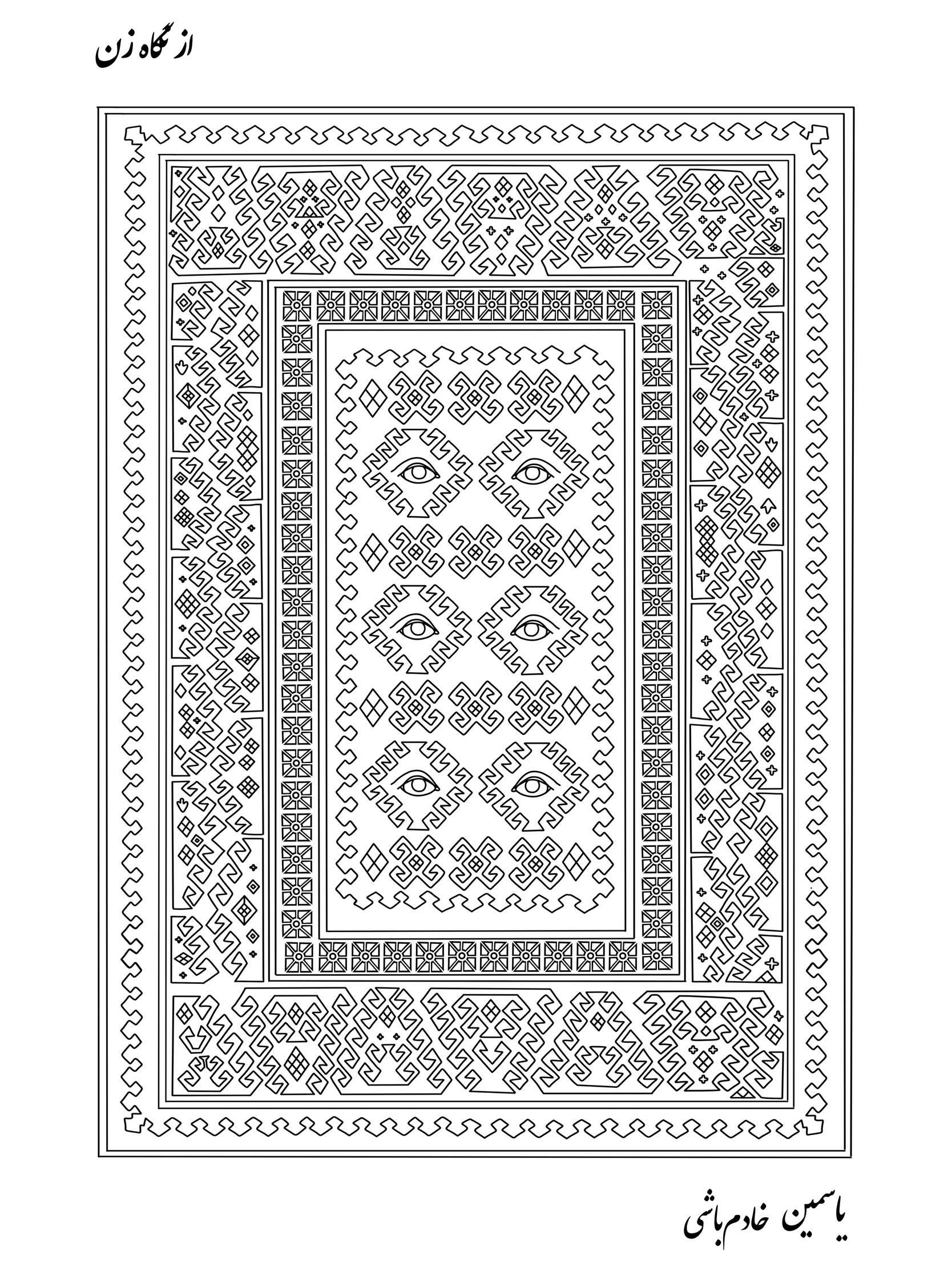
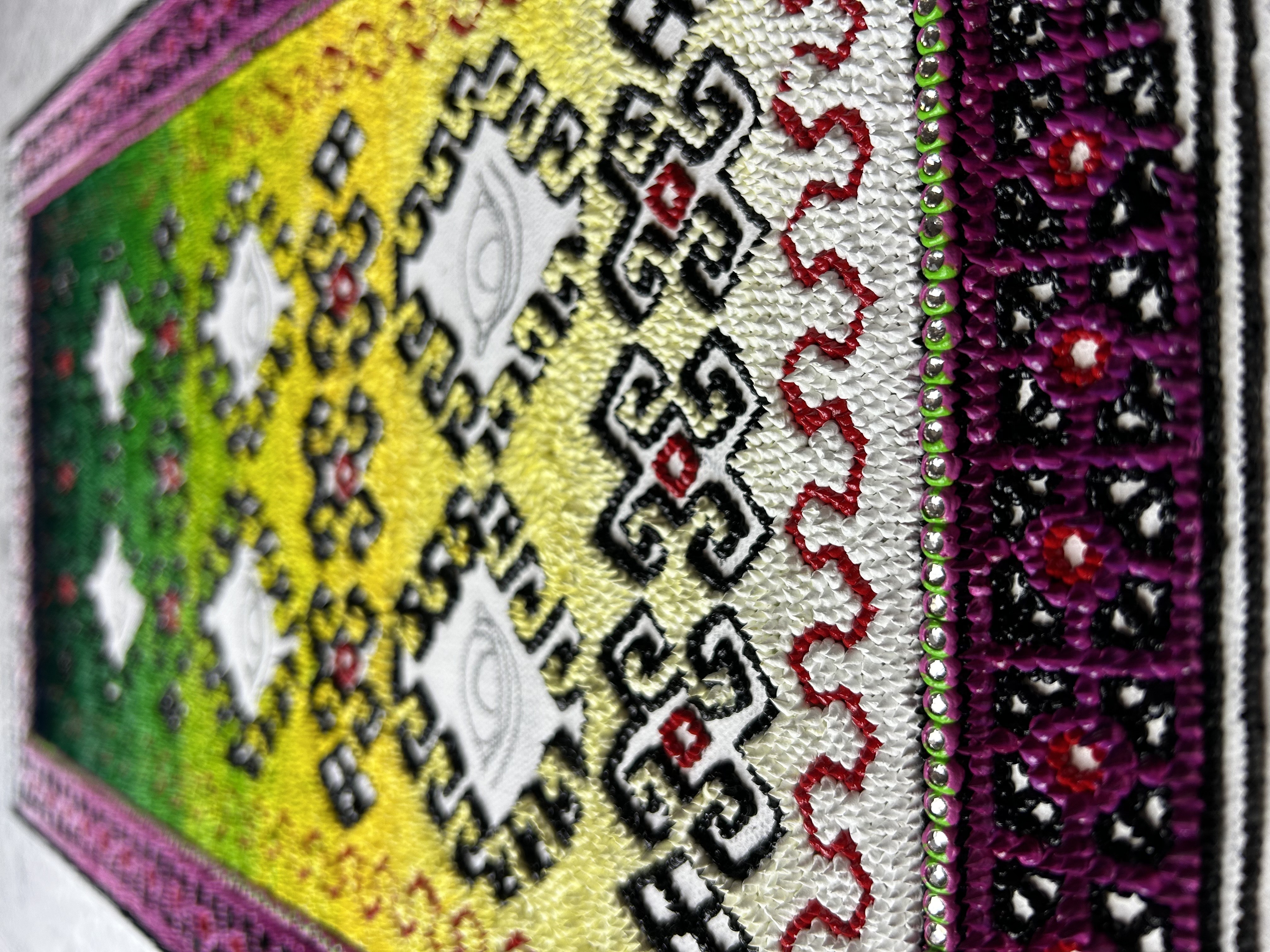
But after a few days, I felt something shift. That itch to create returned. It wasn’t joyful. It was angry. Urgent. So I started something new. A painting that doesn’t really fall into a category. It’s not a portrait. Not a landscape. It sits somewhere in the realm of pattern and symbolism, rooted in rug design, but with a modern vibrancy that pulls it into the now.
I started the composition in Procreate, drawing and measuring everything out before transferring it onto canvas with a projector. From there, I’ve been building up the colour palette. Playing with gradients, saturation and vibrancy to inject movement and rhythm into the piece. It’s inspired by Kilim rugs. A weaving tradition shared across Iran, Anatolia and Central Asia. These rugs are loaded with symbolism, storytelling, history and memory. The kind of memory that lives in hands. In labour. In repetition. In thread.
I’m interested in what happens when you blend those traditional symbols with something contemporary. Something fluorescent, synthetic, digital. I’m interested in what it means to be from a culture rooted in ancient knowledge while living in a world obsessed with speed, erasure and spectacle. That tension is where I live. Too traditional for white Australia. Too modern for the motherland. Too queer. Too loud. Too much. This painting holds that tension. It holds the contradiction of being diasporic. Of living with a fractured identity, a scattered family and a deep longing for something that maybe never fully existed. The colour palette is bright, electric, almost artificial. But the patterning is ancient, intentional, repetitive. It’s a conversation between now and then. Between here and there. Between what I inherited and what I’m inventing.
This month has been rough. Not just on a personal level, but on a global, spiritual, ancestral level. But I know I’m not alone in that. I know other artists from the SWANA diaspora are feeling the same thing. Grappling with grief, guilt, rage, paralysis. And I just want to say - you’re allowed to stop. You’re allowed to rest. You’re allowed to fall apart. And you’re allowed to come back and create something that speaks the truth. I remind myself that art has always been made through grief, through war, through collapse. I keep going because I need to. I keep going because it’s my way of holding on.
July blurred into June. The rhythm has been nonstop, back-to-back painting sessions, admin marathons, collaboration meetings, and studio time bleeding into late nights. But within the rush, something steady has taken root. This month marked the beginning of a new body of work for an
upcoming exhibition at PICA with the Second Generation Collective. I can’t share much yet - it’s all still confidential - but what I can say is that it feels powerful to be building something together, something bigger than ourselves. Working alongside other diasporic artists has reminded me why I make art in the first place: to connect, to reflect, to hold space for the things we carry.
At the same time, I’ve been deep in preparations for my solo exhibition. I’ve been contemplating the number of pieces I want to produce and the scale of the show. I’m constantly wanting to make more - something sparks an idea in my head and I’ll obsess over it until it comes to life. I have this urgency to actualise the vision in my head, to get it out of my body and into the work. But I already have a number of unfinished pieces sitting in the studio, waiting. I know I need to stop starting new things and just finish what’s already begun - but that, truthfully, is where I struggle most. I can start a painting in a heartbeat, no hesitation. But finishing it? Finishing is the hardest part. It can feel repetitive. Boring, even. Like I’ve already said what I need to say. But I’m learning to sit with that discomfort and push through. I owe it to the work to see it through to the end.
I’ve also been continuing the Kilim painting, which has demanded more of me - technically and emotionally, than I expected. It’s slow work, but it’s rich, layered, repetitive in a way that feels meditative. I’ve realised I work best when I can pour all of myself into one project at a time. But with so many things happening at once, I’ve had to learn how to pivot - to stay fluid, to shift focus when needed without losing the thread. Some weeks I live inside one painting; others, I bounce between three. It’s dizzying, yes, but it also feels like growth. Like I’m learning how to hold more.
This month closed out my third month at Fremantle Arts Centre. Since May, I’ve been splitting my time between there and PSAS. FAC is where I get through the admin and the sketching, the logistics and the emails, the scaffolding that holds the work up. PSAS is for the making, late-night painting, stretching canvas, testing ideas. They balance each other: FAC is warm and communal; PSAS is private and grounding. Having both has given me the structure and space to keep building, even when I’m feeling stretched.
I’ve also been navigating some health stuff this month. Being a chronically ill baddie isn’t for the faint-hearted, it’s unpredictable and often invisible - but I’ve been doing my best to listen to my body and honour the pace it needs. Some days I’ve had to work slower or shift my plans, but I’m proud of the way I’ve adapted. The work is still getting made. The ideas are still coming. When two opportunities come along - like these residencies at PSAS and FAC - I feel a real sense of responsibility to take full advantage of them, to make the absolute most out of the spaces, time, and support I’ve been given. I know what a privilege it is to have access to not one, but two institutions backing my practice. And with that comes an inner pressure - and sometimes guilt - when my health
limits what I can physically do. On the days I can’t make it into the studio, it’s hard not to feel like I’m falling short. But I’m learning to be gentler with myself. The work is still moving forward, even if the pace has to shift.
Now that July’s done, I’ve got another round of applications coming up: grants, residencies, awards
- the full carousel. I also need to write a press release, which I’ve never done before. This whole year has been one of stepping into the unknown - learning as I go, trusting the process, building something that feels like mine. It’s been a lot. But it’s also been incredibly rewarding. Even in the overwhelm, there’s momentum. There’s clarity. There’s purpose.
September to December
The last four months of this residency - August through to November - have felt completely different from the rest of the year. Earlier on, I was juggling the admin side of being an artist: writing grants, applying for residencies, answering emails, chasing invoices, and all the other behind-the-scenes things that eat up time and energy. But these final months were something else. Everything quietened down, and I slipped into a rhythm that felt like coming home to myself and my practice.
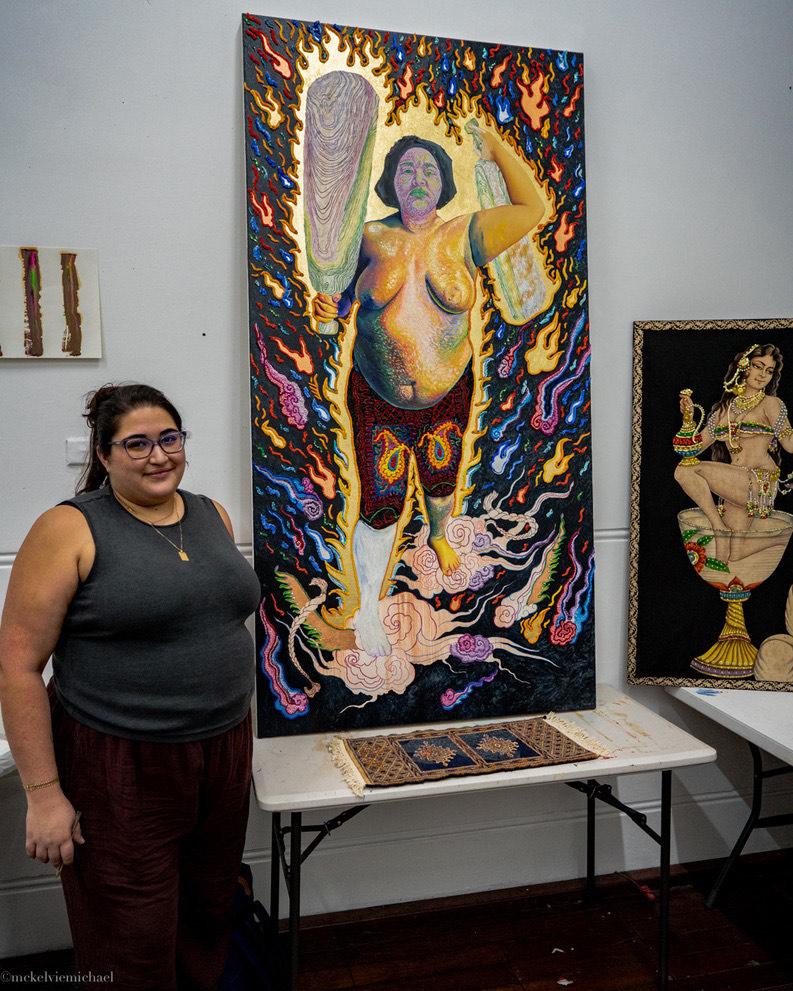
For the first time all year, I could focus fully on finishing my body of work - especially the biggest and most demanding painting I’ve ever attempted. After almost three years of carrying this image in my head, it finally began to take shape in the studio. What started as something I could only see in my mind’s eye slowly became physical and real. This painting feels like a child I’ve been carrying, caring for, returning to, and growing alongside, through all the frustrations and delays.
I began Immoral Warrior in 2022, during the Women, Life, Freedom movement in Iran after the murder of Jina “Mahsa” Amini - a young Kurdish Iranian woman who was beaten to death for “improperly” wearing her hijab. I watched as millions of Iranians, young and old, poured onto the streets in grief and fury. Although I’ve never experienced that fight firsthand, the women in my family have lived it their whole lives. My mother, grandmother, aunties, cousins - their stories have sat inside me for years, shaping me. Those stories became the foundation of this painting.
Originally, this work was supposed to be part of my third-year BCA body of work. But the scale of it was too big, and I didn’t have the time or mental space to take it on properly. For a year it just sat there in my home studio - only the outline drawn - staring at me and haunting me whenever I walked past.
Then 2024 arrived, and with it came the chance to do my Honours. I’d been feeling stagnant, unsure of what to do next or how to move forward in my career. Honours felt like the necessary step - a way to push myself into unfamiliar territory. It also gave me the perfect moment to return to that unfinished painting from 2022. Immoral Warrior became the heart of my Honours project, the backbone of my Studio 7 residency, and now the main work for my exhibition Dreaming in Farsi.
September became the month where I finally let go of all the admin and secondary tasks and just focused on the painting. The wooden meels held in the subject’s hands were the most labour-intensive part of the whole work - and I had been avoiding them for months. These meels are loaded with symbolism in Iranian culture: strength, power, masculinity, tradition. They’re used in the ritual of the Zoorkhaneh, accompanied by rhythmic drumming and chanting. The Morshed - the master drummer - leads the space by beating a zarb and reciting epic, spiritual or moral poetry. The rhythm guides the Pahlevan’s movements, a practice connected to the swirling dances of Sufi dervishes.
These objects aren’t just props - they carry layers of meaning about who is “allowed” to hold power and who isn’t.
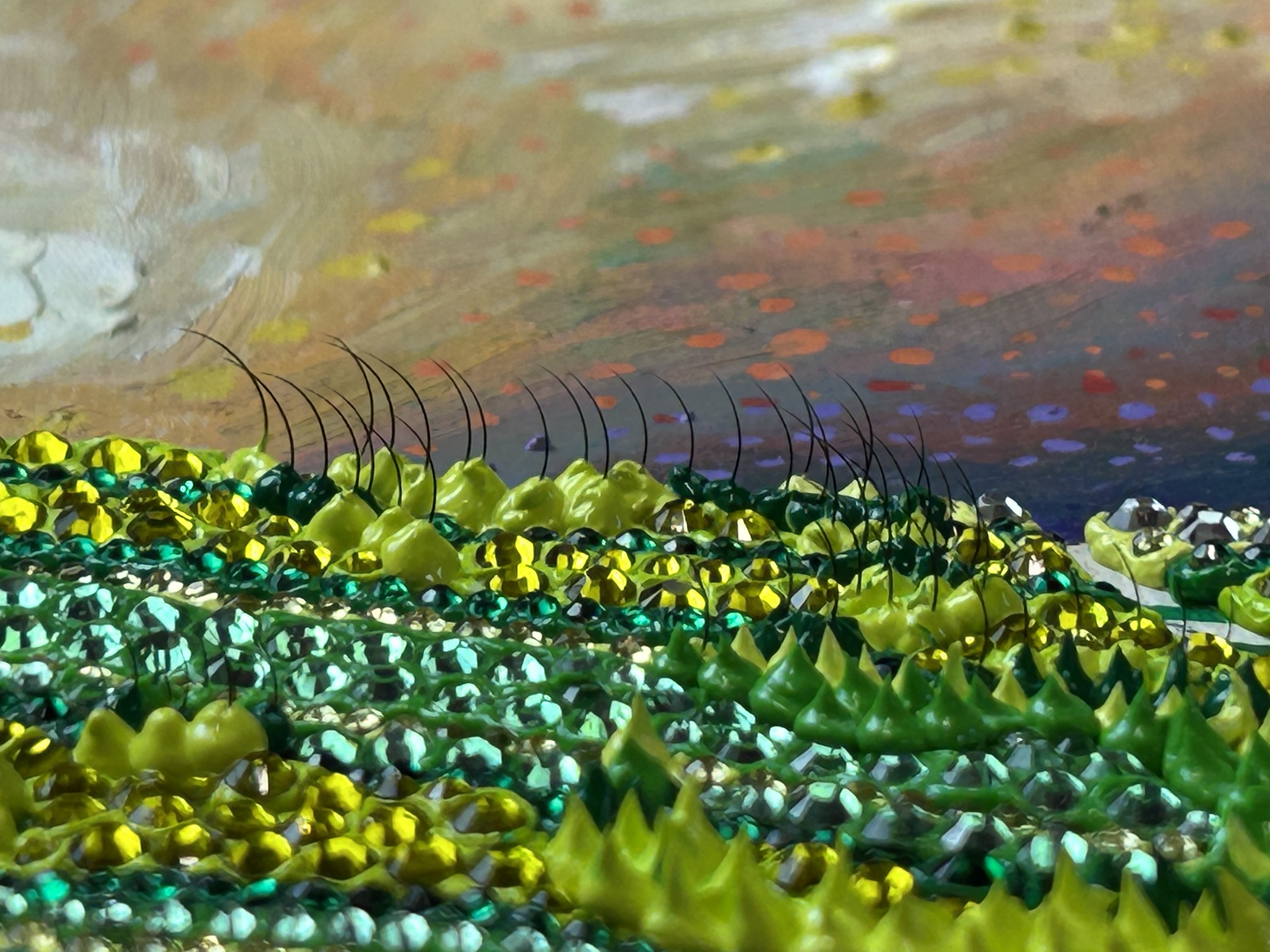
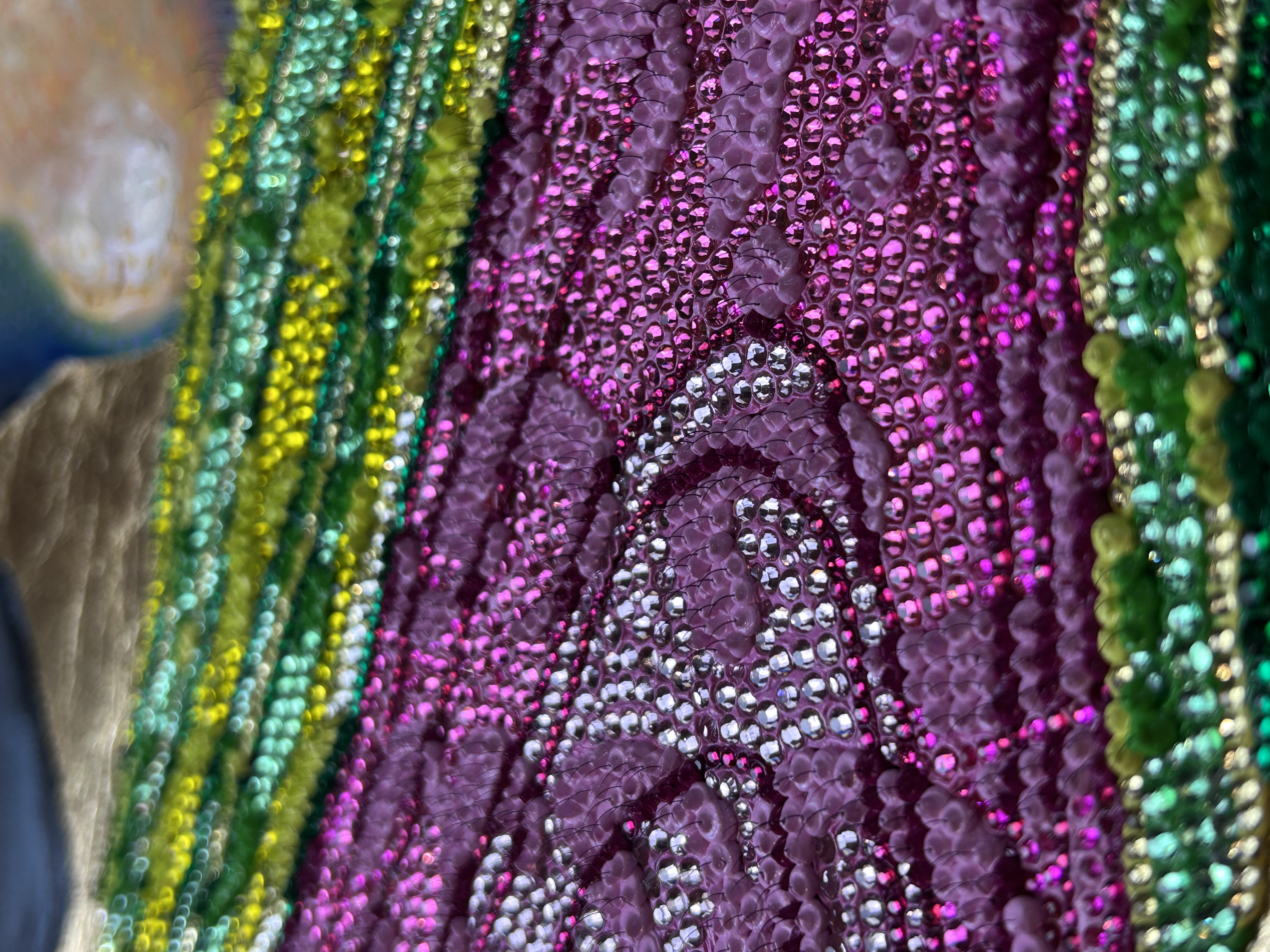
In September, I finally surrendered to the slow, meditative process: piping paint one tiny pixel at a time, embedding each synthetic eyelash individually, placing 2mm rhinestones into detailed patterns. Days and nights blurred into each other. The work finally felt alive.
October and November were almost entirely swallowed by Immoral Warrior. Every day I showed up and chipped away at it. The meels alone took two months to complete - I first placed down the rhinestones which made up the background of the meels and then I embedded the eyelash extensions making up the Farsi scripture spiralling down the meels - layer after layer, detail after detail, correcting, reworking, rebalancing. It felt endless at times, but something shifted during that stretch. The painting began to breathe. It started speaking back.
As the end of the year approached, the panic about funding kicked in again. Would I receive a grant? Would I find support for Dreaming in Farsi? The stress felt suffocating.
Then, in the first week of November, I got the email. A grant from the City of Fremantle.
I actually jumped up out of my chair and did a little dance - I still can’t believe it. This is the first grant I’ve ever received (and the third one I’ve ever applied for in my life). Getting this support reminded me just how important opportunities like this residency are. Having an entire year in a dedicated studio has pushed me in ways I never expected. I grew in confidence, discipline, communication, practical skill, and in understanding what it really means to run an art practice. Honestly, I’ve learnt more in one year at PS than I did in all my university years combined.
As I get ready for Dreaming in Farsi to open in January 2026, I feel just how deeply this residency has shaped me - not just as an artist, but as a person. The exhibition holds pieces that capture my heritage, my questions, my pain, my joy, my memories and my imagination. But Immoral Warrior sits at the centre of it all. It carried me through doubt, fear, and growth. It demanded everything from me - time, patience, courage - and gave so much back in return. Walking into the gallery for the opening will feel like finally exhaling after holding my breath for a very long time.
I’m endlessly grateful to PS Art Space for giving me a home for the past year. A place I could disappear into for hours, experiment, fail, restart, and keep going. A place that held me through ten different half-finished works scattered across the studio. This residency has been the foundation beneath Dreaming in Farsi, and I’m carrying everything I learned here with me into whatever comes next.The journey that began in Studio 7 is now ready to be shared - and I would love for you to be part of it.
Please join me for the opening night of Dreaming in Farsi on January 16th at PS Art Space (22 Pakenham St, Fremantle) at 6:30pm.
It would mean so much to share this moment, this work, and this year-long process with you all!